Physical Address
304 North Cardinal St.
Dorchester Center, MA 02124
Physical Address
304 North Cardinal St.
Dorchester Center, MA 02124

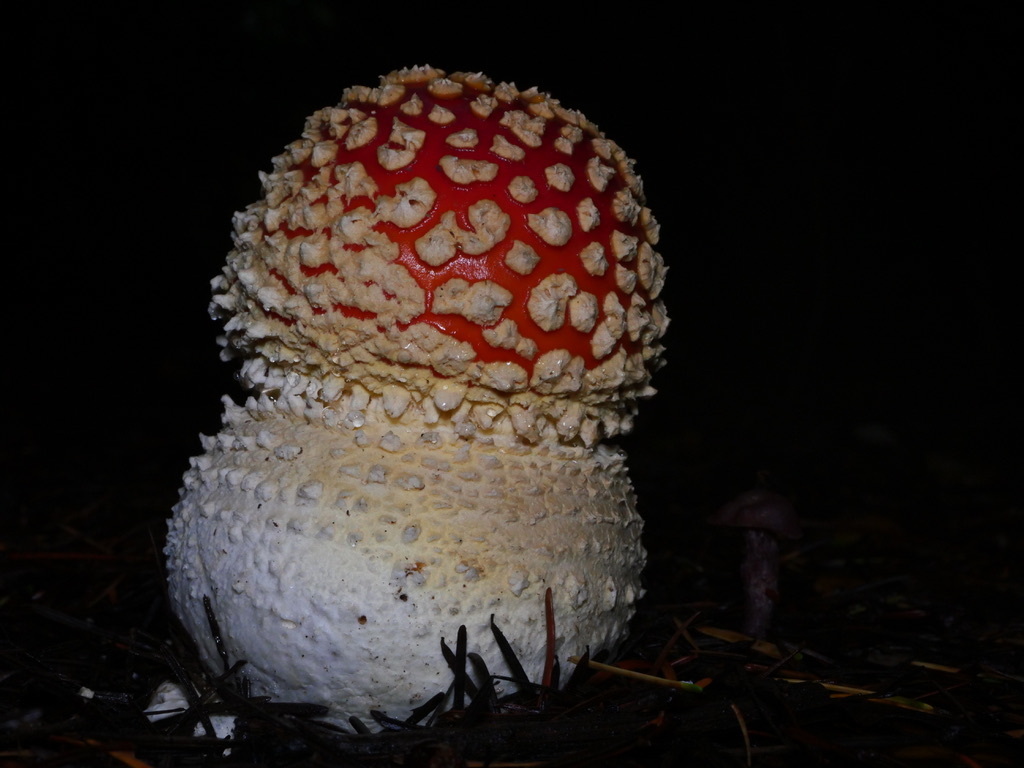
The red-and-white fly agaric is poisonous, yet it has turned up in "microdosing" gummies. Here's how to recognise it, what the FDA and CDC found, and what to do if someone eats it.
With its bright red cap and white spots, the fly agaric (Amanita muscaria) is the classic fairy-tale toadstool. It appears on Christmas cards, garden ornaments and children’s books. In the last few years it has also turned up somewhere far less innocent: in gummies, chocolates and “microdosing” blends sold in convenience stores, smoke shops and online.
This article explains what the fly agaric is, why it is poisonous, what happened when Amanita products went mainstream, and what US regulators and public health officials have said about them. It draws on the US Food and Drug Administration (FDA), the Centers for Disease Control and Prevention (CDC), the Virginia Department of Health, a World Health Organization-linked poisons monograph and the Woodland Trust.
This is safety information, not a guide to using the mushroom. If you think someone has eaten a fly agaric or an Amanita product and feels unwell, contact your local poison centre or emergency services straight away. In the United States, Poison Control is on 1-800-222-1222.
The fly agaric is one of the most recognisable mushrooms in the world. The Woodland Trust describes it as a “highly distinctive, poisonous fungus” with raised white scales on the cap.
| Feature | What to look for |
|---|---|
| Cap | Red or orange-red, 7 to 15 cm across. It flattens and fades towards orange-yellow with age (Woodland Trust) |
| Warts | White to pale yellow patches on the cap (INCHEM) |
| Gills | White (Woodland Trust) |
| Stem | White, with a large ring and a swollen, bulb-like base (INCHEM; Woodland Trust) |
| Habitat | With birch and pine in the Woodland Trust’s description, and under both broadleaf trees and conifers according to INCHEM |
INCHEM, the international chemical safety database, notes that the cap colour varies, “ranging from yellow through orange, orange-red to blood-red or scarlet.” So not every fly agaric looks like the storybook version.
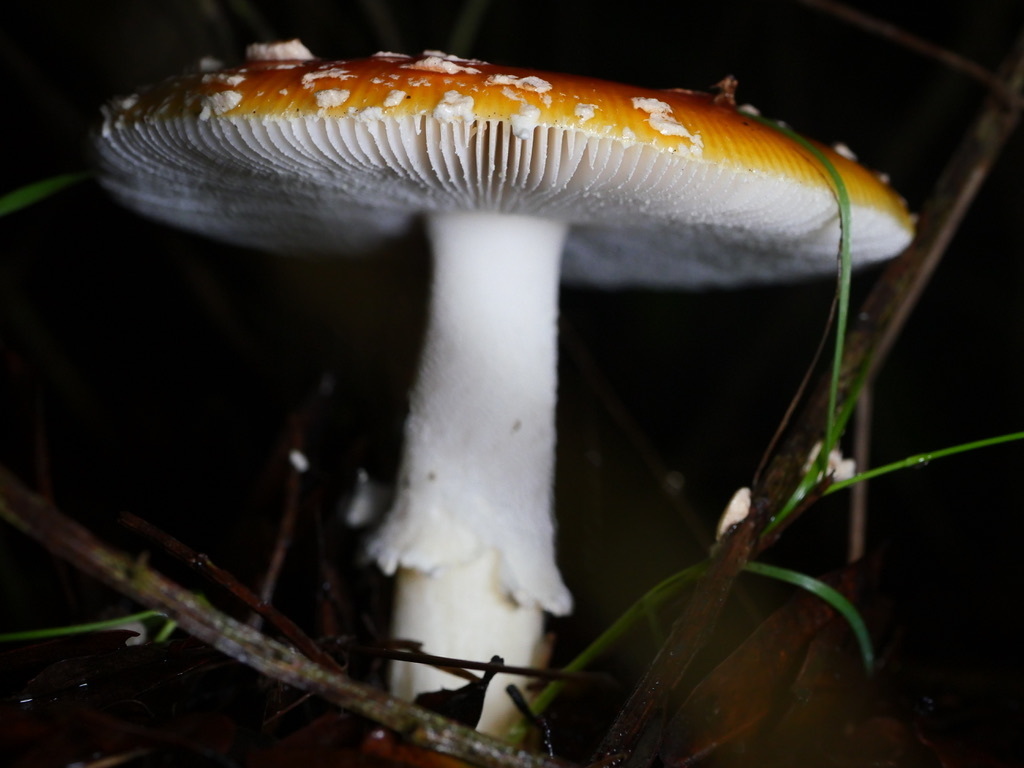
The fly agaric belongs to the genus Amanita, which also includes the deadly death cap. The two poison in very different ways, but the family connection is a good reminder that Amanitas are not mushrooms to experiment with.
According to the INCHEM poisons monograph, the main toxins in the fly agaric and its close relative the panther cap (Amanita pantherina) are ibotenic acid, muscimol and muscazone. These act on the brain and nervous system.
The monograph says symptoms appear 30 to 90 minutes after eating and usually last about 6 hours, but can continue for 12 to 24 hours. It describes:
INCHEM states that deaths from these mushrooms are “extremely rare” and that the outlook is usually good with supportive treatment. But it also says there is no specific antidote, and patients may need hospital care to manage agitation or seizures. INCHEM advises against making a poisoned person vomit, because of the risk of drowsiness and seizures.
Amanita muscaria isn’t a controlled substance in the United States, unlike psilocybin, NPR reported in December 2024. That legal grey area helped a market for Amanita gummies and chocolates grow quickly. The products are often marketed as “nootropic”, “legal psychedelic” or “microdosing” blends. NPR quoted a University of California San Diego epidemiologist who said, “There are hundreds of brands sold online.”
The Virginia Department of Health noted in September 2024 that mushroom gummies and chocolates have grown in popularity since 2023, sold either as supplements or as psychedelics.
The biggest problem turned out to be labelling. In July 2024, the CDC’s Morbidity and Mortality Weekly Report (MMWR) described five people in Charlottesville, Virginia, who needed hospital evaluation after eating gummies labelled as containing Amanita muscaria or other mushrooms. Four were adults. One was a 3-year-old child who ate two gummies by accident.
Researchers then tested six packages from five brands bought at gas stations and smoke shops. They found:
| Finding | Detail from the CDC report |
|---|---|
| Psilocybin or psilocin | Found in four of the six packages, though not listed on the labels. Both are Schedule I controlled substances |
| Other unlisted substances | Caffeine, ephedrine and mitragynine (the main compound in kratom) |
| Amanita toxins | The lab’s testing couldn’t detect muscimol, ibotenic acid or muscarine, so whether they were present is unknown |
The authors warned that labels “might not accurately represent the contents” of these products. The adults had symptoms including a racing heart, confusion, anxiety or drowsiness, and nausea. All were discharged within 12 hours. The child was drowsy and vomiting and went home the next day.
Around the same time, the FDA and CDC investigated illnesses linked to Diamond Shruumz-brand chocolate bars, cones and gummies. By the investigation’s last update, the FDA counted 180 illnesses in 34 states, with 73 hospitalisations and 3 potentially associated deaths. The products were recalled.
People reported symptoms including seizures, loss of consciousness, confusion, agitation, abnormal heart rates, blood pressure changes, nausea and vomiting. FDA testing found muscimol in some products, but also psilocin, a related compound called acetylpsilocin, the prescription drug pregabalin and kava compounds. The FDA said muscimol “does not appear in all products and cannot explain all the symptoms reported by ill people.”
On 18 December 2024, the FDA issued a statement on Amanita muscaria in food. Its main points:
NPR reported that the FDA’s review found “no toxicity studies sufficient to establish the safe use” of the mushroom or its extracts. It also noted that how the agency would enforce the decision was unclear.
Rules differ between countries and can change, so check local laws and health advice where you live.
Products don’t always say “fly agaric” on the front. Based on the FDA’s statement, ingredient names to look out for include Amanita muscaria, Amanita extract, muscimol, ibotenic acid and muscarine. The Virginia Department of Health advises consumers to “be cautious, verify product contents” before using mushroom gummies, and to report any adverse effects to health authorities. But as the CDC testing showed, a label can’t warn you about ingredients that aren’t listed on it.
The story of Amanita gummies shows several risks at once:
If you have any of these products at home, store them where children and pets cannot reach them, or dispose of them safely. The MMWR authors advise that anyone who develops symptoms after taking them “should seek immediate medical attention.”
INCHEM says the fly agaric appears from spring to autumn, and autumn is peak mushroom season in many places. Admire it and photograph it, but don’t pick it to eat. A few simple rules help:
For more on the risks of picking wild mushrooms, see our guide to wild vs cultivated mushrooms.
The fly agaric is a striking woodland fungus, but it is not a food or a wellness product. US regulators have said it isn’t authorised for use in conventional food, and tested Amanita-labelled products have contained unlisted drugs. Like the claims made for mushroom coffee, the marketing around these products runs far ahead of the evidence, but here the risks are much more serious.
Featured image: a young fly agaric by caseyhh via iNaturalist (CC0 1.0). Inline photo by caseyhh via iNaturalist (CC0 1.0).


[…] Even then, a community identification of a photo isn’t the same as an expert examining the mushroom in hand. It’s also not an edibility check. Some look-alikes can be told apart only by features such as smell, spore colour or microscopic detail, which photos rarely show. For a reminder of how much is at stake, see our article on the poisonous fly agaric. […]
[…] be serious, especially in children, older people or anyone with health problems. Our article on the fly agaric covers one of these in […]
[…] bright red fly agaric is easy to spot, and NAMA says dogs frequently eat it and its relatives. NAMA says these toxins are […]