Physical Address
304 North Cardinal St.
Dorchester Center, MA 02124
Physical Address
304 North Cardinal St.
Dorchester Center, MA 02124

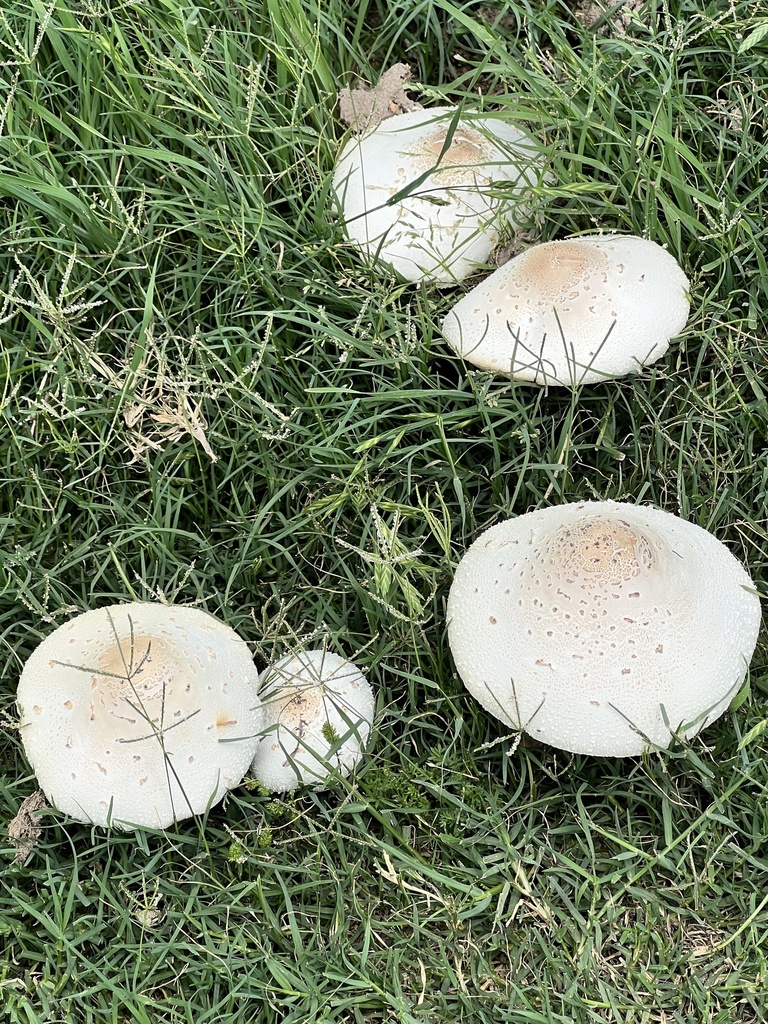
Mushroom ID apps are popular with new foragers, but studies from poison centres found they often misidentify toxic species. Here's what the research shows and how to use apps safely.
Point your phone at a mushroom, tap a button, and an app tells you what it is. Mushroom identification apps have become hugely popular with new foragers, and it’s easy to see why. But when the question is “can I eat this?”, how far can you trust the answer?
Researchers and poison centres have now put several of these tools to the test. This article looks at what they found, why photo-based identification struggles with mushrooms in particular, and how to use apps safely as a learning aid rather than a safety check.
The short answer: an app can be a useful starting point for learning, but no app should ever be the reason you eat a wild mushroom.
In 2023, Hodgson and colleagues published a study in the journal Clinical Toxicology comparing three popular apps. They used photographs of mushrooms involved in exposures reported to the Victorian Poisons Information Centre and the Royal Botanic Gardens Victoria in Australia.
According to a summary of the study by Rick Claypool, research director at the US consumer group Public Citizen, the team tested the apps on photos of 78 mushrooms, with results checked by an expert mycologist. The results were:
| App | Overall accuracy | Toxic mushrooms correctly identified | Death cap correctly identified |
|---|---|---|---|
| Picture Mushroom | 49% | 44% | 60% |
| Mushroom Identificator | About 35% | 30% | 67% |
| iNaturalist | About 35% | 40% | 27% |
Some errors classed toxic mushrooms as edible. Claypool also notes that the apps showed regional bias: Australian toxic species were sometimes matched to similar-looking edible species from North America. The study ended with a “recommendation against using the apps to assess mushroom toxicity.”
The Belgian Poison Centre and Ghent University ran a similar test, comparing an online identification tool with mycologists. The study was carried out in October 2020, and the abstract is published on the Belgian Poison Centre’s website. They used the tool on original photos of 162 mushrooms from poison centre calls in Belgium and France. These were real-world photos, taken by the people involved or bystanders.
| Result | Figure |
|---|---|
| Mushrooms known to be toxic | 63 of 162 (38.9%) |
| Reliable identification from unedited photos | 13 of 162 (8.0%) |
| Reliable identification after resizing photos | 51 of 162 (31.5%) |
| Toxic mushrooms reliably identified (resized) | 18 of 63 |
| …of which wrongly called non-toxic or edible | 8 of 18 (44.4%) |
The authors concluded that “risk assessments based only on the identification of mushrooms by an OIT could be misleading”, where OIT means online identification tool. They recommended that poison centres work closely with mycologists.
The research is still growing. In August 2026, the Australian newspaper the Sentinel-Times reported on a study in the journal npj Science of Food that tested 12 identification tools on more than 100 photos of close to 60 species. According to the newspaper’s report, the worst-performing tools got the identification wrong more than nine times out of ten, and even the best failed almost one time in seven. The report adds that accuracy dropped when mushrooms were partly hidden, poorly lit, cleaned or at the young “button” stage. We haven’t been able to read the study itself, so treat these figures as a news summary.
The same article quoted Victoria’s Deputy Chief Health Officer, Dr Evelyn Wong, who advised that “Adults and children are advised not to handle wild mushrooms with bare hands or eat them,” during the local death cap season.
Mushroom identification relies on far more than a cap’s colour and shape. In his 2024 article for FUNGI magazine, Claypool writes that apps “are not capable of taking any factors into consideration aside from the mushroom’s immediate appearance.” Features such as habitat, smell, bruising and what the mushroom is growing on aren’t considered.
Gizmodo’s report on Public Citizen’s warning lists what experienced identifiers look at beyond the cap: the underside of the cap, its width, the stem, the stem base, and whether it grows on the ground or on wood (and if so, which tree). Many of these are invisible in a typical phone photo taken from above.
That matters most with dangerous groups. Features at the very base of the stem are important clues for the death cap and its relatives, and that base is often buried in soil or left behind when someone snaps off the cap.
Image-recognition tools can only suggest species they have been trained on. iNaturalist’s own computer vision demo page says that “not every possible species is represented by a label in the model”. When a species isn’t covered, the tool may suggest a broader group instead. If a poisonous local species isn’t in the model, the app may offer the closest-looking species it does know.
Claypool points out that apps deliver identifications confidently and rarely express uncertainty, which can give new foragers a false sense of security. He also notes that even a correctly identified edible species can be unsafe if it’s spoiled or past its best, which an app can’t detect.
Gizmodo, reporting on Public Citizen’s findings, says more than 133,000 mushroom poisoning cases were reported in the United States between 1999 and 2016, including 704 with major harm and 52 deaths. It also notes that North America has more than 5,000 species of fleshy mushrooms, of which 75 are known to be deadly or toxic.
Public Citizen’s warnings also cover other AI tools. Gizmodo’s report describes AI-written foraging books sold online in 2023 that contained incorrect and potentially deadly information, and an AI search result that gave cooking steps for a deadly Amanita species. The New York Mycological Society, quoted in the same report, advises: “Please only buy books of known authors and foragers, it can literally mean life or death.”
Not all tools work the same way. Some apps give you an instant answer from a single photo. Community platforms add a human layer on top. iNaturalist, for example, says its “research grade” identifications are “vetted by the community”, meaning other users have reviewed and agreed with the identification. That’s slower, but it means experienced people can spot mistakes, ask for better photos, or say the mushroom can’t be identified from the pictures alone.
Even then, a community identification of a photo isn’t the same as an expert examining the mushroom in hand. It’s also not an edibility check. Some look-alikes can be told apart only by features such as smell, spore colour or microscopic detail, which photos rarely show. For a reminder of how much is at stake, see our article on the poisonous fly agaric.
Apps aren’t useless. Claypool describes them as useful for general learning, just “far from being sufficiently reliable” to be a forager’s main identification tool when the question is edibility. Used carefully, they can help you learn names, spot patterns and log your finds.
| Identification app | Local expert or club | |
|---|---|---|
| Sees the whole mushroom | No, only your photo | Yes, can examine it in hand |
| Considers smell, habitat and substrate | No | Yes |
| Knows local poisonous species | Only if they’re in the model | Yes |
| Can say “I’m not sure” | Rarely | Yes |
| Can make an edibility call | Should never be used for this | Experienced identifiers can, for local species |
Don’t wait for symptoms. The Wisconsin Mycological Society advises contacting “a physician, the closest hospital ER, poison control center, or dial 911, depending on the severity of the reaction.” In the US, Poison Control is on 1-800-222-1222. Keep any leftover mushroom and your photos, as they can help experts identify what was eaten.
Our guide to wild vs cultivated mushrooms explains why sticking to shop-bought or cultivated mushrooms is the safe choice unless you have expert help.
Mushroom ID apps are fun, fast and genuinely useful for learning, but the studies so far show they get it wrong often, including with deadly species. Use them to start a conversation, not to finish one. The safest identification tool is still an experienced person looking at the whole mushroom.
Featured image: green-spored parasols on a lawn by Michelle Lopez via iNaturalist (CC0 1.0).


[…] In practice, that means having an experienced local expert check your find. Our review of mushroom identification apps explains why a phone app isn’t enough on its […]