Physical Address
304 North Cardinal St.
Dorchester Center, MA 02124
Physical Address
304 North Cardinal St.
Dorchester Center, MA 02124

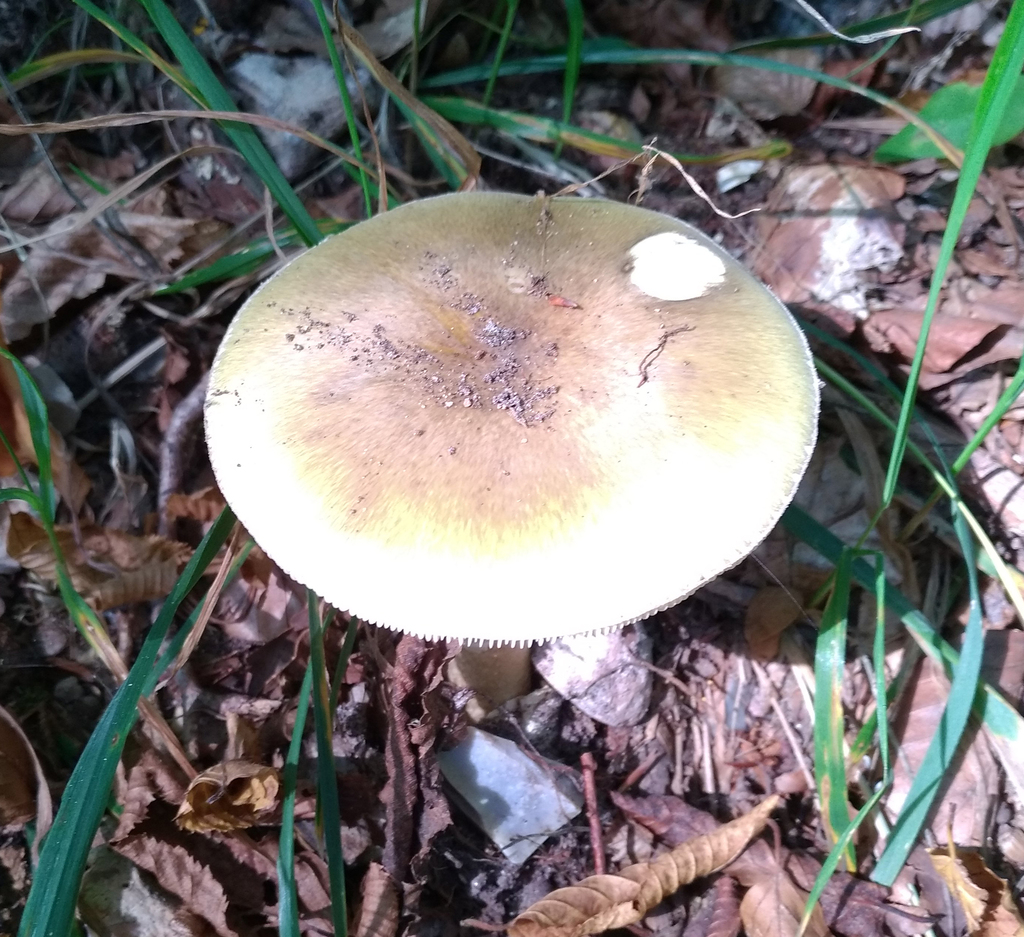
The death cap causes many of the world's fatal mushroom poisonings. Learn why its toxins survive cooking, how poisoning unfolds, which look-alikes fool people, and what to do in an emergency.
The death cap (Amanita phalloides) is one of the most dangerous mushrooms in the world. It contains amatoxins, the group of toxins behind more than 90% of mushroom-related deaths worldwide. These toxins are not destroyed by cooking, drying, or freezing, and the first symptoms of poisoning are delayed by many hours. That delay is what makes it so dangerous: by the time someone feels ill, the toxin has usually already reached the liver. If you think anyone, including a pet, may have eaten a wild mushroom that could be a death cap, treat it as an emergency now, not when symptoms start. In the United States, call Poison Control on 1-800-222-1222; in Australia, call the Poisons Information Centre on 13 11 26; elsewhere, contact your local poison service or emergency number.
This guide explains what the death cap is, the features specialists use to describe it, why those features are not a safe basis for eating anything, what poisoning looks like, and why this European fungus is now a growing concern in places such as California, British Columbia, and Australia.
| Question | Short answer |
|---|---|
| Scientific name | Amanita phalloides, family Amanitaceae |
| Main toxins | Amatoxins (amanitins) |
| Does cooking make it safe? | No. Amanitins are heat stable; boiling, drying, and freezing do not help |
| When do symptoms start? | Usually 6 to 24 hours after eating, which is later than most food poisoning |
| Main organs harmed | Liver and kidneys |
| Where it grows | Under oaks and some other broadleaf trees; native to Europe and introduced elsewhere |
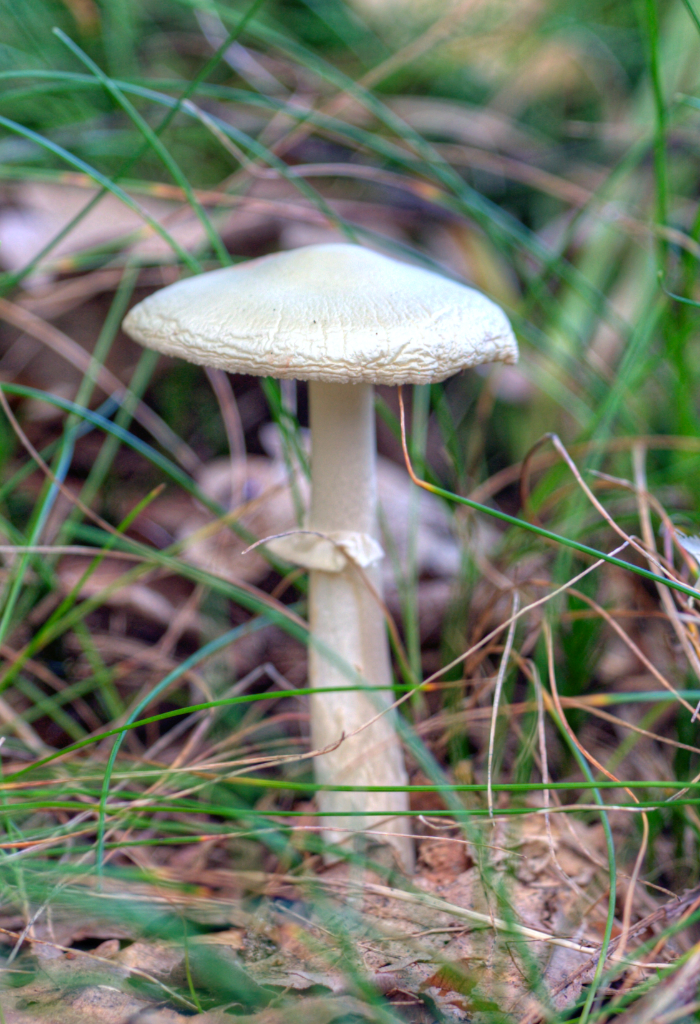
Three things combine to make this mushroom unusually deadly.
The CDC’s report on a 2016 California outbreak notes that a lethal dose of amatoxin can be as low as 0.1 mg per kilogram of body weight, while a single mushroom can contain up to 15 mg. The State Herbarium of South Australia puts it in plainer terms: one third of a cap can kill a child.
Many people assume that thorough cooking neutralises anything harmful in a mushroom. It does not work here. The amanitins are heat stable, and California’s public health department warns that cooking, boiling, drying, or freezing death caps does not make them safe. Taste is no guide either: the same warning notes that death caps can look and taste similar to safe mushrooms.
At the cellular level, amanitins bind to and block RNA polymerase II, the enzyme cells need to read their genes and make new proteins. A 2021 review in the journal Toxins explains that the liver is hit hardest because liver cells take up amanitins efficiently through specific transporters, and part of the toxin is recycled between the bile and the gut, prolonging exposure. Most of the absorbed toxin leaves through the urine, which is one reason the kidneys can also be damaged.
The descriptions below come from herbarium and museum references. They are here so you can understand warnings and recognise when a mushroom needs to be left alone. They are not a checklist for deciding that a mushroom is safe to eat. Individual specimens vary, features change with age and weather, and other dangerous Amanita species share many of the same traits.
| Feature | What references describe | Why it is easy to miss |
|---|---|---|
| Cap | Usually 3 to 12 cm across; greenish, olive, yellowish or olive-brown, often paler at the edge | Colour fades, and some caps are almost white |
| Gills | White to cream, crowded, and free from the stem | Young buttons have no visible gills at all |
| Ring | A white, skirt-like ring on the upper stem | It can collapse, stick to the stem, or wash off |
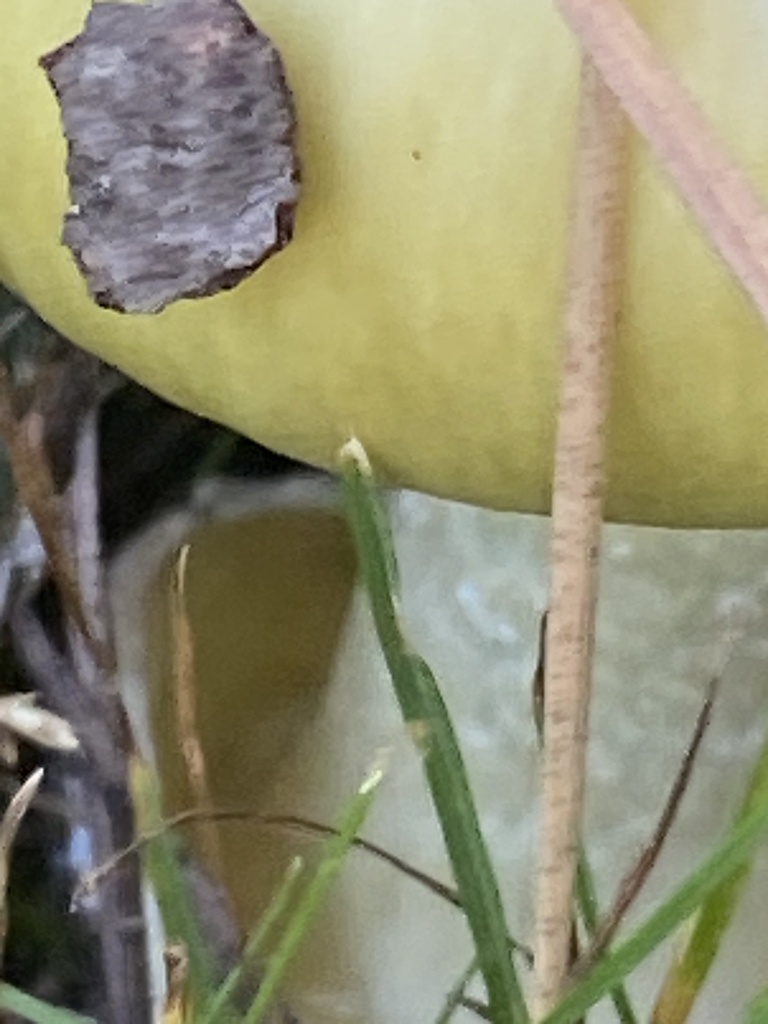
| Base | A swollen bulb wrapped in a white, sac-like cup called a volva | The cup is often buried and stays behind if the stem is snapped off |
| Spore print | White | Several look-alikes also have pale prints |
| Smell | Sweetish when young, becoming unpleasant with age | Smell is subjective and never a safety test |
The University of British Columbia’s Beaty Biodiversity Museum stresses that the cup at the base is often underground and easy to miss. This is one of the most important lessons in mushroom safety: a mushroom picked by snapping the stem can lose the very feature that would have raised the alarm.
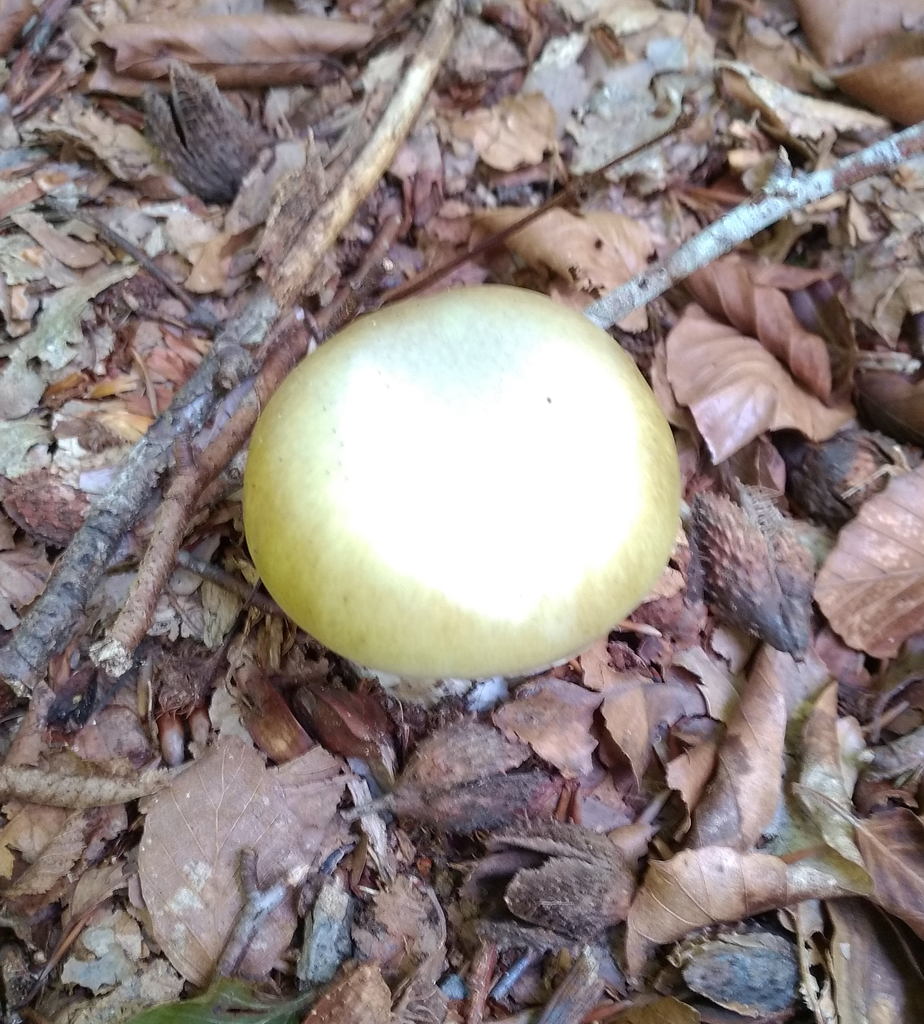
The death cap is mycorrhizal, which means it lives in partnership with the roots of living trees rather than feeding on dead wood. In its native Europe it is strongly associated with oaks, and it is also recorded under hornbeam, sweet chestnut, and other broadleaf trees. In cities it can appear in lawns, parks, and gardens wherever suitable host trees are planted. The UBC museum notes that it has turned up on irrigated lawns in mid-summer, so a garden mushroom is not automatically a harmless one.
Fruiting is closely tied to moisture. Large flushes tend to follow wet weather, which is why outbreaks of poisoning often come after heavy rains. Our explainer on how rain and weather trigger wild mushroom flushes covers the general pattern, and why fall is peak mushroom season explains why autumn brings so many species above ground at once.
Many death cap poisonings do not involve people knowingly eating an unknown mushroom. They happen when someone is confident they have found something familiar. Published case reports and herbarium guides describe several recurring mix-ups.
| Mistaken for | Why the mix-up happens | What specialists point out |
|---|---|---|
| Paddy straw mushroom (Volvariella volvacea) | Both have a cup at the base, and people who know straw mushrooms from Asian markets may look for this feature | Straw mushrooms have no ring and have pink gills and spores; wild straw mushrooms are rare or absent in many regions where death caps are common |
| Puffballs | Young death cap “eggs” are round and white before the cap opens | Slicing a death cap egg from top to bottom reveals the outline of a developing mushroom inside |
| Other Amanita species | Many amanitas share a ring, white gills, and a volva | Several are also deadly, and separating them can require expert examination |
| Stubble rosegill and smooth white parasol | Pale caps, white or pale stems, similar size | The South Australian herbarium lists the stubble rosegill as a look-alike that has been confused with the death cap with fatal results |
The UBC museum records three cases in British Columbia that show how ordinary these mistakes can be. In 2003 a man in Victoria ate young death caps from his front yard, believing they were puffballs. In 2008 a woman in Langley ate death caps she thought were straw mushrooms. Both survived after extended hospital stays. In 2016 a three-year-old child in Victoria died after eating death caps growing on a downtown property.
This is why we repeat the same message in every foraging article on this site. A photo, a diagram, an app, or a written description cannot confirm that a wild mushroom is safe to eat. If you are interested in wild mushrooms, our comparison of wild versus cultivated mushrooms explains why buying from reputable sources removes this risk, and our guide to true and false morels shows how similar problems arise with other species.
Amatoxin poisoning follows a recognisable pattern. The CDC report summarises it as delayed gastroenteritis, a period of apparent recovery, and then liver and multi-organ failure.
Because the early symptoms look like a stomach bug, the illness can be misdiagnosed. In the 2016 California outbreak, one patient was first sent home with a diagnosis of gastroenteritis and returned the next day. Telling doctors that wild mushrooms were eaten, and when, matters enormously.
The CDC investigation describes 14 suspected death cap poisonings in northern California over about two weeks in December 2016, after the Bay Area Mycological Society warned of an unusually large flush. Three patients needed liver transplants, including a child left with permanent neurological impairment. Some of the mushrooms had been picked by acquaintances and shared, and one group of young men believed they had found hallucinogenic mushrooms.
The pattern repeated in late 2025. On 5 December 2025, the California Department of Public Health reported 21 cases identified by the California Poison Control System, mainly in the Monterey and San Francisco Bay areas, including one adult death, and urged people not to gather wild mushrooms that season.
Act on the possibility, not on symptoms. Waiting for illness wastes the hours when care is most useful.
Hospital care centres on aggressive fluid and electrolyte replacement, close monitoring of liver and kidney function, and drugs intended to limit how much toxin reaches liver cells. In the 2016 outbreak, all patients received intravenous fluids, octreotide, and silibinin, a compound derived from milk thistle. Severe cases may need a liver transplant.
It is important to be honest about the evidence. The 2021 Toxins review states that there is no international consensus on how to manage death cap poisoning and that no randomised controlled trials have tested these treatments. Most clinical evidence comes from retrospective case series. This is why prevention, and early contact with poison specialists, matter so much. Milk thistle products sold as supplements are not a substitute for hospital treatment.
The death cap is native to Europe, but it now grows on several other continents. Genetic work led by Anne Pringle, published in Molecular Ecology in 2009, found strong evidence that California’s death caps came from Europe, probably carried on the roots of imported trees. The earliest confirmed Californian collections date from 1938, and the study estimated that the fungus has been spreading at an average of roughly 5 km per year. Crucially, it appears to have partnered with the native coast live oak, allowing it to move from planted trees into native woodland.
The species is now recorded from southern California to British Columbia, and herbarium records in Australia list it from several states and territories. Because it fruits near homes, schools, and parks under planted trees, people who have never thought of themselves as foragers can encounter it. Families with young children and dogs in areas where it occurs should know what it looks like and remove mushrooms from play areas, wearing gloves or washing hands afterwards.
The death cap does not need to make you afraid of mushrooms, but it should change how you think about wild ones. Enjoy cultivated mushrooms from shops and growers, or grow your own from known spawn; our beginner’s guide to mushroom growing is a good starting point. If you want to learn about wild fungi, join a local mycological society, learn from experts in person, and treat identification as a lifelong skill rather than something an app or article can provide. And if there is any chance someone has eaten a death cap, call for help immediately.
This article is for general education and is not medical advice. It cannot be used to identify mushrooms for eating.

[…] cap, for example, belongs to a family with whitish spores, just like many edible mushrooms. Our death cap guide explains why that […]
[…] but it’s not a shortcut to deciding whether it’s edible. Dangerous species such as the death cap are identified using many features together. Our guides to true and false morels and wild vs […]
[…] rather than breaking off only the cap. This matters most with dangerous groups, such as the death cap and its relatives, where features at the very base of the stem are important […]
[…] fly agaric belongs to the genus Amanita, which also includes the deadly death cap. The two poison in very different ways, but the family connection is a good reminder that Amanitas […]
[…] most with dangerous groups. Features at the very base of the stem are important clues for the death cap and its relatives, and that base is often buried in soil or left behind when someone snaps off the […]
[…] toxic” Amanita and is responsible for 95% of deaths from mushroom poisoning. Our guide to the death cap explains how to recognise it, and our article on true and false morels covers the Gyromitra […]
[…] mushrooms like the death cap “the most concerning of all”. Our guide to the death cap explains how to recognise […]
[…] article on the death cap mushroom explains why Amanita poisoning is so […]