Physical Address
304 North Cardinal St.
Dorchester Center, MA 02124
Physical Address
304 North Cardinal St.
Dorchester Center, MA 02124

Some wild mushrooms can kill a dog, and signs may not appear for hours. Learn which mushrooms are most dangerous to dogs, the warning signs, what to do straight away and how to cut the risk.
After a wet spell, mushrooms can appear on lawns, verges and woodland paths almost overnight. For most people they’re just part of the scenery. For dog owners, they’re a worry, because dogs explore with their noses and mouths, and some wild mushrooms are deadly to them.
This guide explains which mushrooms are most dangerous to dogs (and cats), the warning signs, what to do straight away and how to reduce the risk at home and on walks. It’s based on advice from the ASPCA Animal Poison Control Center, Pet Poison Helpline, the North American Mycological Association (NAMA) and Australia’s Animal Poisons Helpline.
If your dog has eaten a wild mushroom, contact your vet or an animal poison helpline now, even if your dog seems fine. In the US, the ASPCA Animal Poison Control Center is on (888) 426-4435 and Pet Poison Helpline is on (855) 764-7661. NAMA notes that a fee applies for animal poison control services. In Australia, the Animal Poisons Helpline is on 1300 869 738.
Dogs are curious, and mushrooms are often right at nose height on a walk or in the garden. NAMA notes that dogs seem especially attracted to certain species, possibly because of their “fishy odor”. It says dogs show a strong interest in the death cap (Amanita phalloides), one of the deadliest mushrooms of all.
The ASPCA notes that mushrooms can appear quickly after wet weather, so a lawn that was clear yesterday may not be today.
Pet Poison Helpline says three groups, Amanita, Galerina and Lepiota, cause most confirmed fatal mushroom poisonings in pets. Other mushrooms can also cause serious illness.
| Mushroom group | Main effect | What happens and when |
|---|---|---|
| Death cap and other amatoxin mushrooms (Amanita, Galerina, Lepiota) | Liver damage | NAMA says signs begin after a delay of “6-12+ hours”, followed by severe stomach upset. The ASPCA gives a delay of 8 to 24 hours, then yellowing of the eyes and skin, and eventually liver failure and death |
| Fibrecaps and some funnel caps (Inocybe, Clitocybe) | Muscarinic effects | The ASPCA lists vomiting, diarrhoea, slowed heart rate and heavy drooling. NAMA warns that some “can be lethal to dogs” |
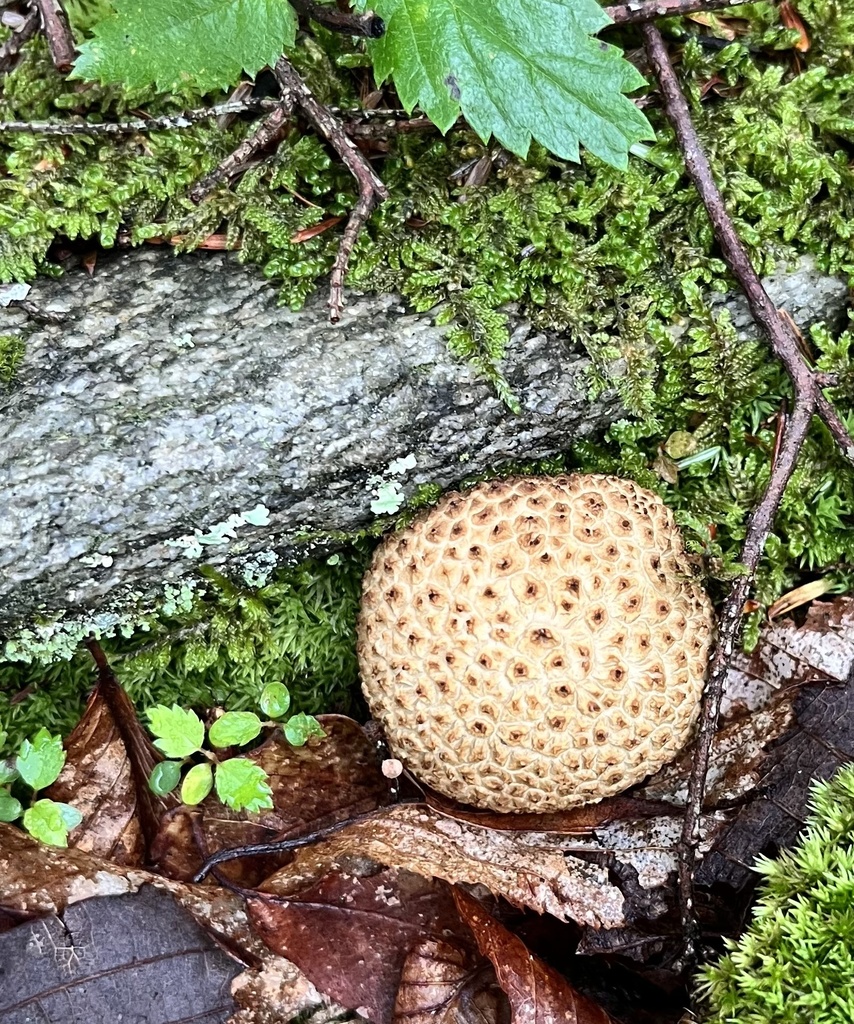
| Earthballs (Scleroderma) | Stomach upset | Vomiting and diarrhoea within a few hours, according to the ASPCA. NAMA says they can be lethal to dogs |
| Fly agaric and panther-type Amanitas | Nervous system | NAMA says dogs often eat these and may fall into a deep, coma-like sleep a few hours later. Most recover, though it can take up to 72 hours |
| Hallucinogenic mushrooms | Nervous system | The ASPCA lists wobbliness, agitation, sensitivity to sound and touch, and tremors |
| Green-spored parasol (Chlorophyllum molybdites) | Stomach upset | Australia’s Animal Poisons Helpline says it can cause severe gastroenteritis with significant fluid and electrolyte loss |
NAMA’s summary of poisoning reports from 2006 to 2017 confirms that “there were deaths of dogs from both Inocybe species and Scleroderma species”, as well as from amatoxin mushrooms. The ASPCA calls liver-damaging mushrooms like the death cap “the most concerning of all”. Our guide to the death cap explains how to recognise it.
The bright red fly agaric is easy to spot, and NAMA says dogs frequently eat it and its relatives. NAMA says these toxins are rarely fatal to dogs, and most dogs recover. It also warns that atropine, a drug used for some other mushroom poisonings, should not be given to dogs or cats that have eaten these species, because it can deepen the coma-like sleep and raise the risk of death. That decision is for your vet, but it shows why identifying the mushroom matters.
Cats are much less likely to eat mushrooms. But NAMA notes that cats can be attracted to dried fly agaric and panther-type Amanitas, which have sometimes been fatal. If you keep dried mushrooms of any kind, store them securely.
Pet Poison Helpline says some mushroom toxins affect pets within 15 to 30 minutes, while others don’t cause signs for up to 24 hours. Watch for:
The most dangerous trap is a delay. With liver-damaging mushrooms, a dog may seem normal for hours. Don’t wait for signs before calling for help.
Knowing what to expect can make an emergency a little less frightening. VCA Animal Hospitals, in a guide written by two vets, describes the usual approach:
| Step | What it involves (VCA) |
|---|---|
| History | Your vet will ask what your dog ate, when, and what signs you’ve seen. VCA says “Evidence of exposure to mushrooms is the first factor in an accurate diagnosis” |
| Tests | A physical exam, plus blood and urine tests to check how the organs are working |
| Decontamination | If your dog arrives soon after eating the mushroom, the vet may make them vomit to empty the stomach. VCA says “Minimizing absorption of the toxin is critical” |
| Activated charcoal | Given to bind toxins in the gut and reduce how much is absorbed |
| Fluids | A drip treats dehydration and, VCA notes, also supports kidney and liver function |
| Monitoring | Because some toxins act slowly, liver and kidney tests “may be repeated every 24–48 hours” |
The outlook depends on the type of mushroom. VCA says stomach-upset mushrooms often cause mild illness that can sometimes be managed at home under veterinary guidance. Liver-damaging Amanitas are far more serious: “If not treated quickly and aggressively, liver failure is irreversible.” Kidney-damaging mushrooms may not cause signs for 12 hours to a week or more. This is why early treatment matters so much, even when your dog seems well.
VCA suggests wrapping a mushroom sample in a damp paper towel rather than a plastic bag, which fits with NAMA’s advice to avoid plastic.
Identification can change treatment, so it’s worth the effort. The ASPCA suggests a mycologist, a local university mycology department or an online consultation. NAMA keeps a list of volunteers who can help identify mushrooms in poisoning cases. Don’t rely on a phone app: our article on mushroom identification apps explains why.
Once your pet has been treated, NAMA encourages owners to report every case, even mild stomach upset, to its Poison Case Registry. These reports help experts understand which species cause problems.
The ASPCA says store-bought mushrooms are usually not dangerous to pets, but recommends avoiding giving your pet any type of mushroom. Keep foraged mushrooms, dried mushrooms and any mushroom products well out of reach.
| Situation | What to do |
|---|---|
| You saw your dog eat a wild mushroom | Call your vet or an animal poison helpline now, even if your dog seems fine |
| Your dog has vomiting, drooling, wobbliness or seizures after a walk | Go to a vet straight away |
| You’re not sure what the mushroom was | Collect a sample in paper, refrigerate it and take photos |
| Mushrooms in your garden | Remove them regularly and dispose of them where your dog can’t reach |
| Shop-bought mushrooms | Usually not dangerous, but the ASPCA advises not feeding mushrooms to pets |
Featured image: common earthball by M Sorensen via iNaturalist (CC0 1.0).


[…] one, contact a poison control centre or a vet straight away. Our guides to mushroom poisoning and poisonous mushrooms and dogs explain what to do. Photo apps can be a useful learning tool, but our review of mushroom […]