Physical Address
304 North Cardinal St.
Dorchester Center, MA 02124
Physical Address
304 North Cardinal St.
Dorchester Center, MA 02124

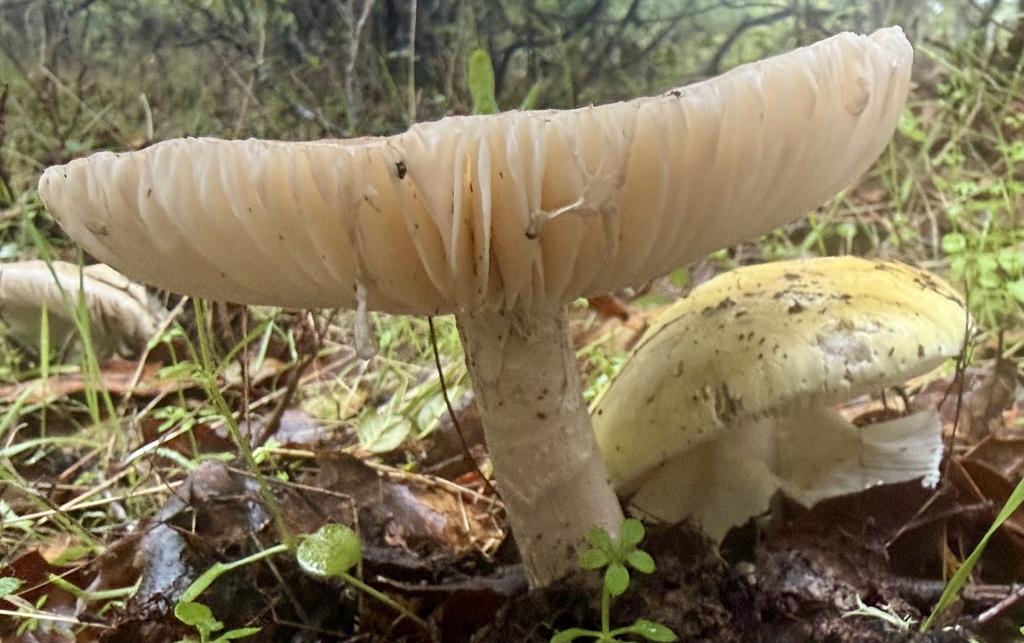
Most mushroom exposures are mild, but the deadliest species often cause symptoms late. Learn the main types of mushroom poisoning, who is most at risk and exactly what to do if someone eats a wild mushroom.
Every autumn, as wild mushrooms pop up in lawns, parks and woods, poison centres take calls from worried parents, foragers and pet owners. Most mushroom exposures turn out to be mild. But a small number of species can cause liver failure, kidney failure or death, and the early signs can be misleadingly gentle.
This guide explains the main types of mushroom poisoning, why the timing of symptoms matters so much, who is most at risk and exactly what to do if someone eats a wild mushroom. It’s based on guidance from the Merck Manual, the US Centers for Disease Control and Prevention (CDC), the Oregon Poison Center, NSW Health in Australia and other expert sources.
If someone has eaten a wild mushroom, don’t wait for symptoms. Call your poison centre now. In the US, Poison Control is 1-800-222-1222. In Australia, the Poisons Information Centre is 13 11 26. If the person is struggling to breathe, collapses or has a seizure, call your emergency number.
This article is general information and can’t replace medical advice.
A CDC report published in 2021 estimated that in 2016 there were around 1,328 emergency department visits and 100 hospital stays in the United States after people accidentally ate poisonous mushrooms. Looking at insurance records for 2016 to 2018, the researchers found that 8.6% of patients had a serious outcome. The most common were:
| Serious outcome | Share of patients (CDC, 2016 to 2018) |
|---|---|
| Abnormal heart rhythm | 2.7% |
| Acute kidney failure | 2.2% |
| Liver failure | 1.8% |
| Muscle breakdown (rhabdomyolysis) | 1.4% |
| Seizure | 1.4% |
The authors note that many poisonings probably go unreported, so the true numbers may be higher. Deaths weren’t included in their analysis, because data on deaths weren’t available to them.
The Merck Manual, a medical reference written for health professionals, groups mushroom poisonings by how quickly symptoms start. It says mushrooms that cause symptoms early are “less dangerous than those that cause symptoms later.” Early onset generally means within about 2 hours of eating, and late onset usually means after 5 hours.
That’s counter-intuitive. People often assume that if they feel fine an hour after a meal, the mushrooms were safe. With some of the deadliest species, the opposite can be true.
NSW Health says people may get sick anywhere from 30 minutes to 24 hours after eating a mushroom, depending on the type, the amount eaten and their general health. Some syndromes described by the Merck Manual start even later.
| Type | Example mushrooms (Merck Manual) | Typical onset | Main symptoms |
|---|---|---|---|
| Stomach upset (gastroenteritis) | Chlorophyllum molybdites and small brown lawn mushrooms | Early | Vomiting and diarrhoea, sometimes headache or muscle aches. Usually settles within 24 hours |
| Muscarinic | Some Inocybe and Clitocybe species | Within 30 minutes | Sweating, watering eyes and mouth, small pupils, slow heart rate. Usually settles within 12 hours |
| Hallucinogenic | Mushrooms containing psilocybin | 15 to 30 minutes | Hallucinations, fast heart rate and raised blood pressure |
| Isoxazole | Fly agaric and panther cap (INCHEM) | 30 to 90 minutes | Drowsiness, confusion, agitation, muscle twitching |
Early-onset poisonings can still be serious, especially in children, older people or anyone with health problems. Our article on the fly agaric covers one of these in detail.
| Type | Example mushrooms (Merck Manual) | Typical onset | What happens |
|---|---|---|---|
| Amatoxin poisoning | Death cap (Amanita phalloides) and related Amanitas | Stomach symptoms 6 to 12 hours after eating | Followed by liver failure and sometimes kidney failure |
| Gyromitra poisoning | False morels (Gyromitra) | Delayed | Low blood sugar, nervous system effects such as seizures, then possible liver and kidney damage |
| Cortinarius poisoning | Some Cortinarius species | Stomach upset lasting about 3 days | Kidney failure 3 to 20 days after eating |
| Muscle damage | Some Tricholoma species | 24 to 72 hours | Breakdown of muscle (rhabdomyolysis) |
The Merck Manual says the death cap is “the most toxic” Amanita and is responsible for 95% of deaths from mushroom poisoning. Our guide to the death cap explains how to recognise it, and our article on true and false morels covers the Gyromitra risk.
The Merck Manual also lists some less familiar delayed poisonings, which show how varied mushroom toxins can be:
These syndromes are uncommon, but they’re a reminder that “I felt fine the next day” is no guarantee that a wild mushroom was safe.
With the death cap, the Merck Manual describes stomach symptoms starting 6 to 12 hours after the meal, followed by liver failure. With some Cortinarius species, kidney failure can follow days or even weeks later. By the time the most serious damage shows, hours or days have passed. This is why medical advice is to call for help straight away after eating an unknown wild mushroom, rather than waiting to see what happens.
The CDC report and other sources highlight several groups:
| Myth | The reality |
|---|---|
| “Cooking makes it safe.” | The CDC and NSW Health both say cooking doesn’t remove mushroom toxins. NSW Health adds that soaking, peeling or drying don’t either |
| “There’s a simple test for poisonous mushrooms.” | The Merck Manual calls folklore identification tests “unreliable” |
| “If it’s edible for me, it’s edible for everyone.” | The Oregon Poison Center says “No edible mushroom is tolerated by 100% of all people” |
| “A field guide or online forum is enough.” | The Oregon Poison Center advises: “Do not only rely on local field guides or online forums for identification” |
| “An app can tell me if it’s safe.” | Studies of identification apps found frequent errors. See our article on mushroom identification apps |
The Merck Manual says that treatment for most mushroom poisonings is “symptomatic and supportive”. This means treating dehydration, low blood sugar, seizures or other problems as they arise. Doctors may give activated charcoal to reduce absorption. For the most serious cases, such as liver failure after amatoxin poisoning, specialist hospital care is needed, and the Merck Manual says a liver transplant may be required.
Most mushroom exposures are mild, but a few species can be deadly, and the most dangerous ones often cause symptoms late. If anyone eats a wild mushroom they can’t be completely sure of, call a poison centre straight away, keep a sample, and don’t wait to see if symptoms appear.
Featured image: death cap by Chuck Wilson via iNaturalist (CC0 1.0).

[…] wild mushroom, contact a poison control centre or seek medical help straight away. Our guide to mushroom poisoning symptoms and what to do explains the steps in more […]
[…] or pet may have eaten one, contact a poison control centre or a vet straight away. Our guides to mushroom poisoning and poisonous mushrooms and dogs explain what to do. Photo apps can be a useful learning tool, but […]