Physical Address
304 North Cardinal St.
Dorchester Center, MA 02124
Physical Address
304 North Cardinal St.
Dorchester Center, MA 02124

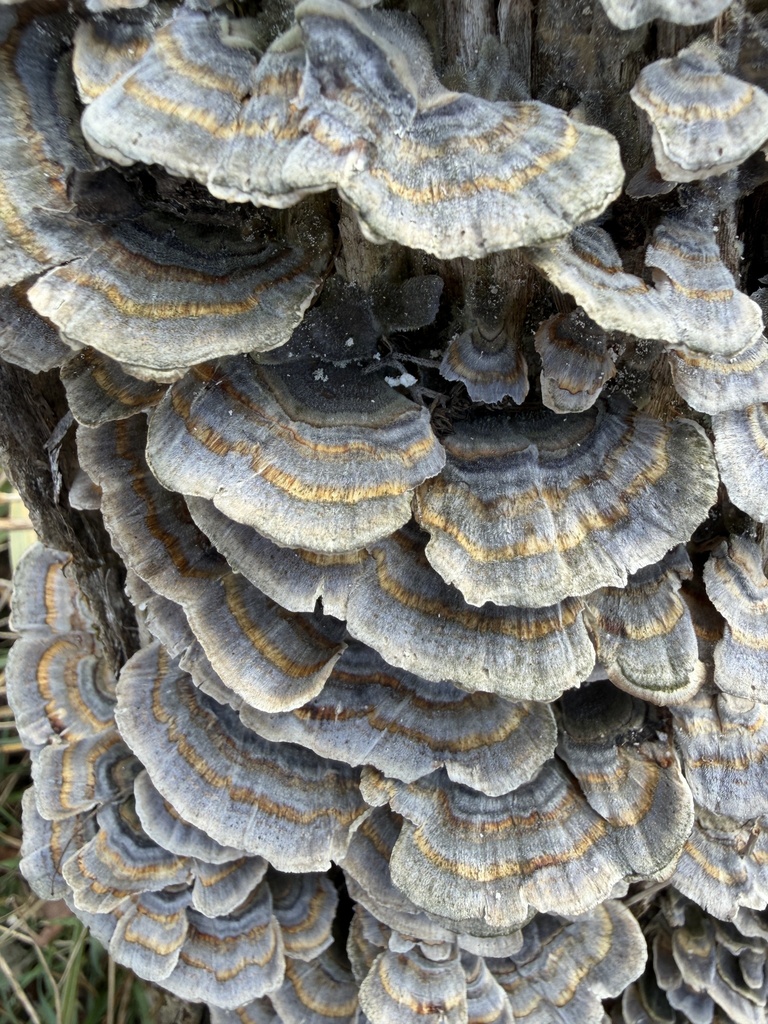
Mycelium is being grown into packaging, insulation panels and leather-like fabrics. Here's how mycelium materials are made, what they're used for, how they compare with plastics and leather, and the challenges ahead.
Imagine packaging that you can break up and compost, wall panels grown rather than manufactured, and a leather-like fabric made without animals. All of these are being made from mycelium, the thread-like “root” network that fungi grow through wood, soil and plant waste. Mycelium materials have moved from art projects to factories, and they’re one of the most talked-about trends in sustainable design.
This guide explains how mycelium materials are made, what they’re used for, how they compare with plastics and leather, and the real challenges that still stand in the way. It draws on recent scientific reviews and industry reporting.
When you see a mushroom, you’re looking at the fruiting body of a fungus, its reproductive structure. Most of the fungus is hidden: a network of microscopic threads called hyphae, which together make up the mycelium. Mycelium grows through its food, such as wood or straw, digesting it and binding the particles together as it spreads. Our guide to fruiting bodies vs mycelium explains the difference in more detail.
That binding ability is what makes mycelium useful as a material. Instead of glue or plastic resin, the fungus itself holds everything together.
Mycelium isn’t only grown for materials. The mycelium of a mould called Fusarium venenatum is grown in fermentation tanks and eaten as a meat alternative. Our article on mycoprotein covers that side of the story. In this article, we focus on mycelium as a building block for products.
There are two broad families of mycelium materials: composites, where mycelium binds a filler such as plant waste, and pure mycelium sheets or foams.
A 2022 review in the journal Biomimetics by Bitting and colleagues describes the basic process for mycelium-bound composites:
If this sounds familiar, it’s because it’s very close to how mushroom growers prepare substrate and spawn. Our guides on sterilisation vs pasteurisation and making grain spawn cover the same basic steps for growing mushrooms.
Leather-like materials are made differently. A 2023 patent review by Elsacker and colleagues in Frontiers in Bioengineering and Biotechnology describes three main routes:
| Method | How it works |
|---|---|
| Solid-state surface growth | Mycelium grows on a solid plant-based substrate, and the mat that forms on top is cut off |
| Liquid-state surface growth | A colonised substrate is blended into a slurry, and a mycelium mat forms on top over about 10 to 18 days |
| Submerged fermentation | Biomass is grown in a stirred bioreactor, then filtered, washed and dried |
The raw mat is then treated, dyed and often coated to make a usable material.
Many different fungi have been tested, and the choice matters. The 2025 review by Camilleri and colleagues in Biotechnology Advances describes studies using turkey tail (Trametes versicolor), a close relative called Trametes multicolor, and even shiitake (Lentinula edodes) grown on palm residues. Turkey tail is better known to many readers as a medicinal mushroom, but here it’s the mycelium, not the mushroom, that does the work.
The results differ a lot between species and substrates. In the studies the review summarises, one turkey tail composite showed “very low water absorption”, while a shiitake composite on palm waste absorbed water quickly. This variability is both a challenge and an opportunity: by choosing the right fungus and filler, makers can tune a material for a particular job.
| Use | Examples from the research |
|---|---|
| Packaging | Protective packaging as an alternative to polystyrene. Camilleri and colleagues’ 2025 review in Biotechnology Advances lists Ecovative among the companies producing it |
| Insulation | Bitting’s review says insulation panels from the company Biohm reach a thermal conductivity of 0.024 W/m·K, better than glass fibre, mineral wool and expanded polystyrene |
| Acoustic panels | A mycelium acoustic tile performed close to a commercial ceiling tile in one comparison, while being lighter |
| Interiors and furniture | Companies such as Mogu (floors and acoustic tiles) and Krown Design (panels and interior products), according to the 2025 review |
| Leather alternatives | Bags, clothing and car seat covers, according to the patent review |
| Architecture | Mostly non-structural uses so far, plus experimental pavilions |
The industry isn’t limited to the US and Europe. The 2025 review lists MycoTile in Kenya, which makes ceiling panels, wall insulation, construction blocks and furniture, and textile-focused companies including MycoTex, Mycotech Lab, Fine Mycelium and Air Mycelium. In architecture, the Biomimetics review mentions MycoTree as a rare load-bearing mycelium structure, though its height was limited by the material’s low strength.
In 2014, architect David Benjamin’s Hy-Fi installation opened in the courtyard of MoMA PS1 in New York. It was built from bricks made by combining corn and mycelium, which “fuse together to create lightweight, organic bricks,” in collaboration with Ecovative Design.
In fashion, mycelium leather attracted big names. In 2023, MycoWorks was preparing to open a 136,000 square foot plant in Union, South Carolina, to make its mycelium material Reishi, with brand partners including Hermès, Ligne Roset and GM, according to Fashion Dive.
| Issue | What the research says |
|---|---|
| Weight | Mycelium packaging is about 55 to 210 kg/m³, compared with roughly 10 to 50 kg/m³ for polystyrene foam (Bitting et al.) |
| Strength | Low mechanical properties limit structural use. Heat-pressing can raise strength to levels comparable with OSB or MDF board |
| Water | One study quoted in the 2025 review found “high and fast water absorption” was the main disadvantage compared with polystyrene, though results vary between fungi and substrates |
| Consistency | Properties vary with fungal strain, substrate and growing conditions, and there are no standard production guidelines |
| Speed | Growth takes about two weeks or more, so production can’t match the speed of plastic foams (Camilleri et al.) |
| Cost | The 2025 review calls limited cost competitiveness with conventional plastics “the key obstacle” |
| Coatings | Most commercial mycelium leathers have a polyurethane (PU) coating of 10 to 500 μm, which hinders biodegradability (Elsacker et al.) |
Mostly, but not automatically. The 2025 review notes that mycelium composites are “not entirely carbon neutral”, because sterilisation, climate control and transport all use energy. It suggests renewable energy can reduce their footprint. The patent review also points out that biodegradability is reduced when a material is coated in plastic.
Durability is a balancing act too. A product that breaks down easily in compost may also break down too early in use. The 2025 review notes a shortage of long-term performance studies.
The industry has had its ups and downs. In 2023, Bolt Threads paused production of its mycelium leather, Mylo, after funding ran out. Its CEO told Vogue Business that the company had “paused Mylo to reassess what works and what will work in the future,” according to Biofuels Digest. Brands including Stella McCartney, Kering and Adidas had shown interest in the material.
Researchers say the main things needed to grow the field are lower costs, standard testing methods, better data sharing between companies and universities, and longer-term studies of how the materials perform. The Biomimetics review also notes that patents held by a small number of companies may slow progress.
On a small scale, yes. The process uses the same skills as growing mushrooms: a clean substrate, healthy spawn, a mould and a controlled environment. Contamination is the most common problem, just as it is in mushroom growing. Our guide to preventing contamination covers the basics. Because the final step involves heating the material to stop growth, it’s a good idea to follow a tested method from a reputable source and keep projects small.
Mycelium materials are a real and fast-moving field, already used in packaging, insulation, acoustic panels and fashion. They’re made from waste, can be composted and can perform well as insulators. But they’re still more expensive than plastics, vary from batch to batch, are weaker than many conventional materials and often need coatings that reduce their green credentials. Expect to see more of them, especially where their strengths matter most.
Featured image: turkey tail by Conway Hawn via iNaturalist (CC0 1.0).


[…] than digest it. Packaging and insulation grown from mycelium are already on sale, as our article on mycelium materials explains. If you’re new to the difference between a mushroom and its mycelium, our guide to […]