Physical Address
304 North Cardinal St.
Dorchester Center, MA 02124
Physical Address
304 North Cardinal St.
Dorchester Center, MA 02124

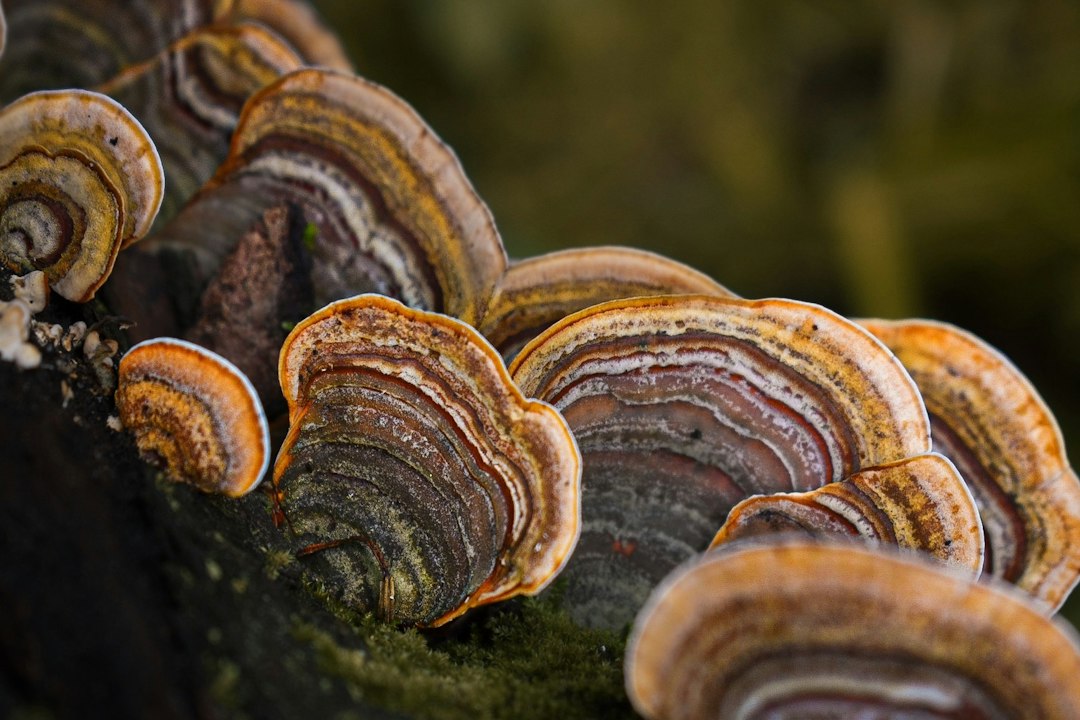
Turkey tail (Trametes versicolor, also called Coriolus versicolor) is a common bracket fungus named for its layered bands of colour. It i
Turkey tail (Trametes versicolor, also called Coriolus versicolor) is a common bracket fungus named for its layered bands of colour. It is visually striking on fallen wood and is studied for compounds used in some specialist research and medical settings, but supplement marketing can overstate what is known.
Turkey tail typically forms thin, overlapping shelves with concentric bands of cream, brown, grey, blue, or orange. The underside has tiny pores rather than gills. Similar-looking fungi exist, so visual resemblance alone is not enough for safe identification or consumption.
As a wood-decaying fungus, turkey tail helps break down dead timber and recycle nutrients. The colourful shelves can appear in clusters on logs and stumps. This ecological role is well established and is one reason the species is interesting beyond its use in supplements.

Turkey tail contains polysaccharides and other compounds that researchers have investigated, including in relation to immune activity. Some preparations have been used as adjuncts in specific clinical contexts in certain countries, but that does not mean over-the-counter supplements treat cancer or replace standard care. Memorial Sloan Kettering’s Coriolus versicolor overview outlines uses, evidence, and cautions.

Products can vary in species, extraction method, purity, and dose. People receiving cancer treatment, taking immune-modifying medicines, pregnant or breastfeeding people, and anyone with a chronic condition should consult their healthcare team before using concentrated supplements. Do not stop prescribed treatment because of claims made about mushrooms.

Turkey tail is a good subject for observing fungi in the forest, but leave uncertain specimens unidentified and avoid collecting from polluted or treated wood. Photograph the upper surface and underside, note the substrate, and compare observations with a reliable field guide or local mycological group.
Can turkey tail cure cancer? It is not a proven stand-alone cancer treatment. Is it the same as every colourful bracket fungus? No. Is it important ecologically? Yes—it helps decompose wood and return nutrients to the ecosystem.
Continue with Cordyceps: From Caterpillar Parasite to Popular Energy Supplement or Button, Cremini, and Portobello: One Mushroom, Three Names. For a beginner-friendly overview, read Best Mushrooms to Grow at Home and browse the Nature and Food categories.