Physical Address
304 North Cardinal St.
Dorchester Center, MA 02124
Physical Address
304 North Cardinal St.
Dorchester Center, MA 02124

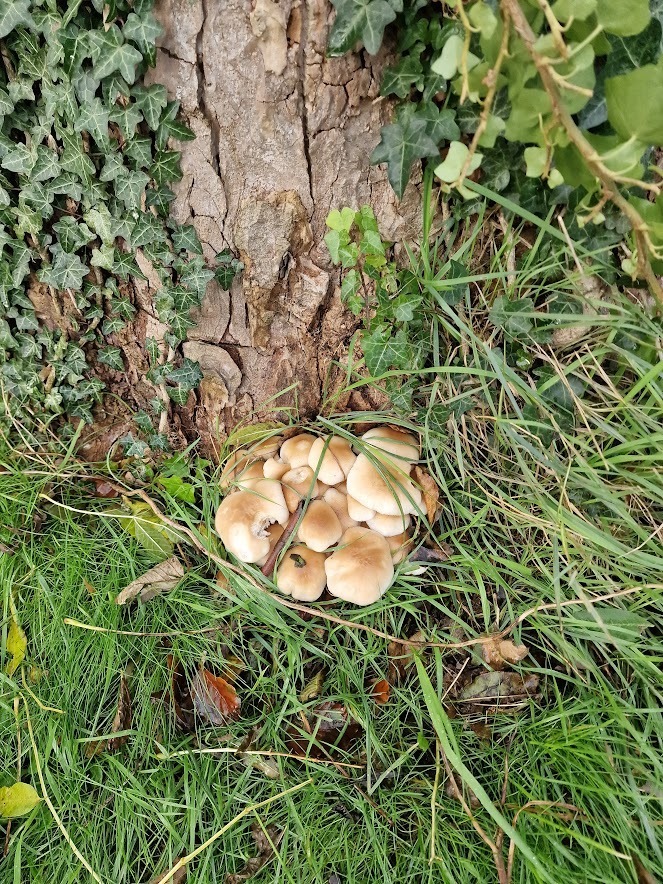
Pioppino grows on sawdust blocks indoors or on half-buried logs and woodchip beds outdoors. Here are the published temperatures, humidity and fresh-air targets, the yields from recent studies, and why choosing a good strain matters so much.
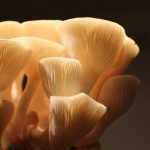
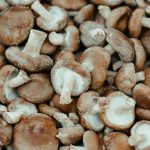
Pioppino, also called the black poplar mushroom, grows in tight clusters of chestnut-brown caps on long, firm stems. Cooks like it because it stays crisp and nutty after cooking. Growers like it because it fills a gap: it can be grown indoors on sawdust blocks like oyster or shiitake, or outdoors on half-buried logs and woodchip beds like wine caps.
It is also a mushroom where the details matter. Strains differ a lot in yield, the scientific name has changed more than once, and the clusters need steady humidity to develop properly. This guide gathers what researchers and spawn suppliers have published, step by step, so you can set up a grow that works.
You will see pioppino sold under several Latin names, including Agrocybe aegerita, Cyclocybe aegerita and Cyclocybe cylindracea. A 2020 study in Mycological Progress by Frings and colleagues found that what had been treated as one species is really at least two groups: a European C. aegerita and an Asian group, which the authors provisionally called Cyclocybe chaxingu agg. The two groups also fruited differently in the lab. European strains tended to form more fruit bodies with smaller caps and shorter stems, while Asian strains tended to form larger fruit bodies with bigger caps and longer stems.
For growers, the takeaway is practical. Buy spawn or a culture from a supplier that names its strain. Different strains can behave very differently, and the yield figures later in this article show how much difference that can make.
| Factor | What sources report |
|---|---|
| Natural food | Dead wood of broadleaf trees, especially poplar and willow (Frings et al. 2020) |
| Best mycelium growth | 20 to 25°C in liquid culture (Sakthivel et al. 2012) |
| Indoor fruiting temperature | 55 to 65°F, about 13 to 18°C (North Spore) |
| Outdoor fruiting temperature | 45 to 60°F, about 7 to 16°C (Mushroom Mountain) |
| Humidity | 95 to 100% while pinning, 85 to 95% as the mushrooms mature (North Spore) |
| Fresh air | Keep CO2 under 2,000 ppm; higher levels cause long, stringy stems and lower yields (North Spore) |
| Lab fruiting setup | Pre-incubation at 25°C in darkness, then fruiting at 20°C with 12 hours of light a day (Frings et al. 2020) |
The figures don’t all agree, partly because they come from different strains and different set-ups. Treat them as a starting window rather than exact targets.
Pioppino grows well on the same kind of supplemented hardwood sawdust used for many gourmet mushrooms. If you are not sure which base material to use, our guide to mushroom substrates compares the common choices.
Two recent studies show that pioppino can make use of a range of agricultural leftovers:
Biological efficiency is the fresh weight of mushrooms divided by the dry weight of the substrate. It is a common way to compare yields.
Pioppino tells you about its air supply through its stems. Long, thin, stringy stems with small caps mean CO2 is too high, so increase fresh-air exchange. Caps that crack or pins that stall usually mean the air is too dry.
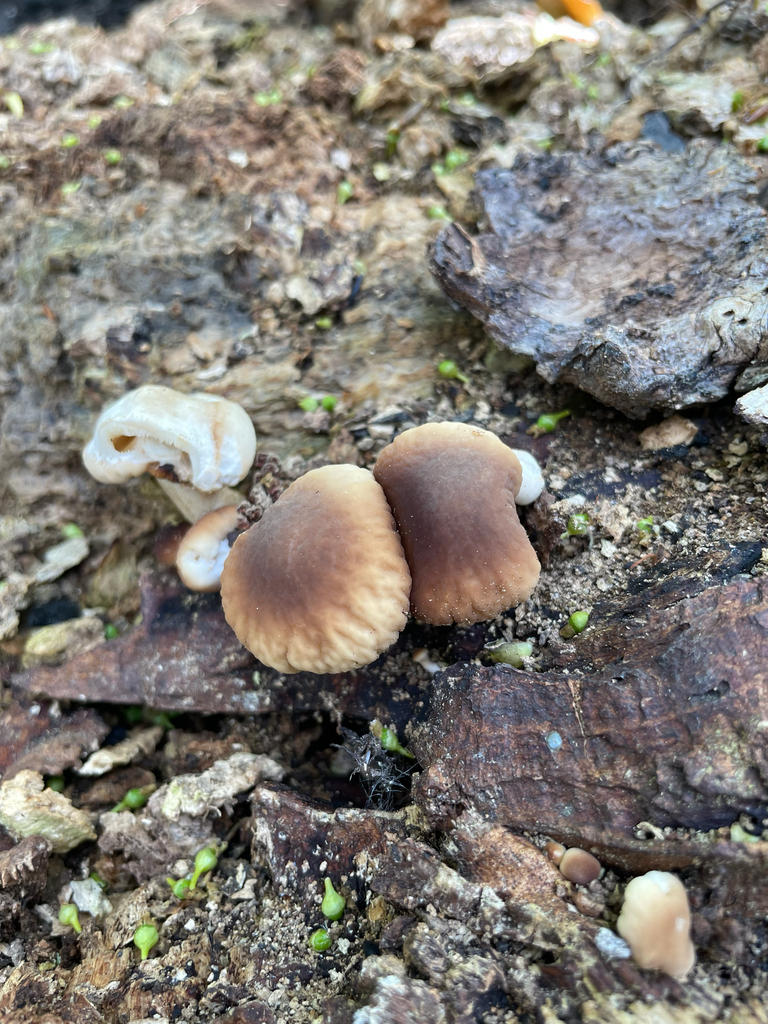
As a general rule, harvest the whole cluster while most caps are still rounded and fairly dark, before they flatten out and drop brown spores. Twist or cut it off at the base. Wild Food UK describes young caps as chestnut brown, fading to light brown or pale cream as they age. North Spore notes that second flushes are not reliable, though a block may produce again if humidity and other conditions stay right. Our guide to getting second and third flushes covers the general approach.
Pioppino can also be grown outside. That suits gardeners who already grow wine caps or shiitake.
Mushroom Mountain recommends half-burying hardwood logs lengthwise in a shaded wooded or garden spot. Use plug or sawdust spawn for logs. North Spore specifically says not to use grain spawn for log inoculation. The species is a natural decomposer of poplar and willow, so those woods are a logical choice if you have them. Expect outdoor fruiting in cool weather, mainly in spring, at around 45 to 60°F (7 to 16°C). Mushroom Mountain also notes that pioppino sometimes spreads into nearby woodchip piles.
North Spore suggests mixing grain spawn with straw or wood chips to make outdoor beds or containers. The method is very similar to a wine cap bed: build a layer of moist chips or straw in a shaded spot, mix in the spawn, cover the bed, and keep it moist. Our guide to outdoor wine cap beds covers bed building in more detail.
| Indoor blocks | Outdoor logs or beds | |
|---|---|---|
| Time to first harvest | About 6 weeks from inoculation in the Ukrainian trials | Usually a season or more |
| Control | High | Low |
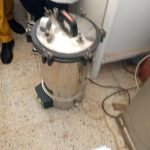
| Spawn type | Grain spawn into sterilised sawdust | Plug or sawdust spawn for logs; grain spawn for chip or straw beds |
| Main risk | Contamination, drying out | Competing wild fungi, dry weather |
| Symptom | Likely cause | What to try |
|---|---|---|
| Long, thin, stringy stems with small caps | Too much CO2 | Increase fresh-air exchange, aiming for under 2,000 ppm |
| Pins form, then stop growing or shrivel | Humidity dropped during pinning | Raise humidity to 95 to 100% and stop air from blowing directly onto the block |
| Block fully colonised but no pins for weeks | Too warm, or not enough of a change in conditions | Move the block somewhere cooler, around 13 to 18°C, and open it to fresh air and light |
| Green, black or pink patches on the block | Contamination | Remove the block from your growing area. Review your sterilisation and inoculation hygiene before you try again, using our contamination guide |
| Very low yield despite healthy-looking blocks | Strain | Try a different, named strain from a reputable supplier |
The Ukrainian study shows how much strains differ. Under the same industrial conditions, the best strain yielded about 220 g per kilogram of substrate, with a biological efficiency of about 60%. The weakest yielded only about 73 g per kilogram, with a biological efficiency of about 10%. That is roughly a threefold difference in yield and a sixfold difference in biological efficiency, caused by the strain alone.
If your first grow is poor, try a different strain before you change everything else.
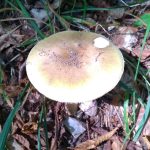
Pioppino also grows wild in Europe. Wild Food UK describes it as forming large groups on stumps, roots and dead wood, especially black poplar and willow. It has a brown spore print and a persistent ring on the stem. The same guide lists look-alikes, including other fieldcaps such as Agrocybe praecox and Agrocybe rivulosa, and even oyster mushrooms when the stem is bent. Its contributors also point out that fieldcaps can be hard to identify to species even from photos.
That is a good reason to keep your growing and foraging separate. Grow from named spawn. If a cluster appears near your logs or beds that you’re not sure about, do not eat it on the strength of a description or a photo. Have it checked by an experienced local identifier, or leave it alone.
North Spore describes cultivated pioppino as mild and nutty, with caps and stems that stay firm and turn crisp when cooked. It also advises cooking the mushrooms thoroughly, and trying a small amount the first time you eat this species in case of a reaction. That is sensible advice for any mushroom that is new to you. Because the stems are firm, keep them on and sauté the whole cluster, separated into small bunches.
Featured image: wild poplar mushroom by Sim Elliott via iNaturalist (CC0 1.0). Inline photo by Loick Tyson via iNaturalist (CC0 1.0).