Physical Address
304 North Cardinal St.
Dorchester Center, MA 02124
Physical Address
304 North Cardinal St.
Dorchester Center, MA 02124

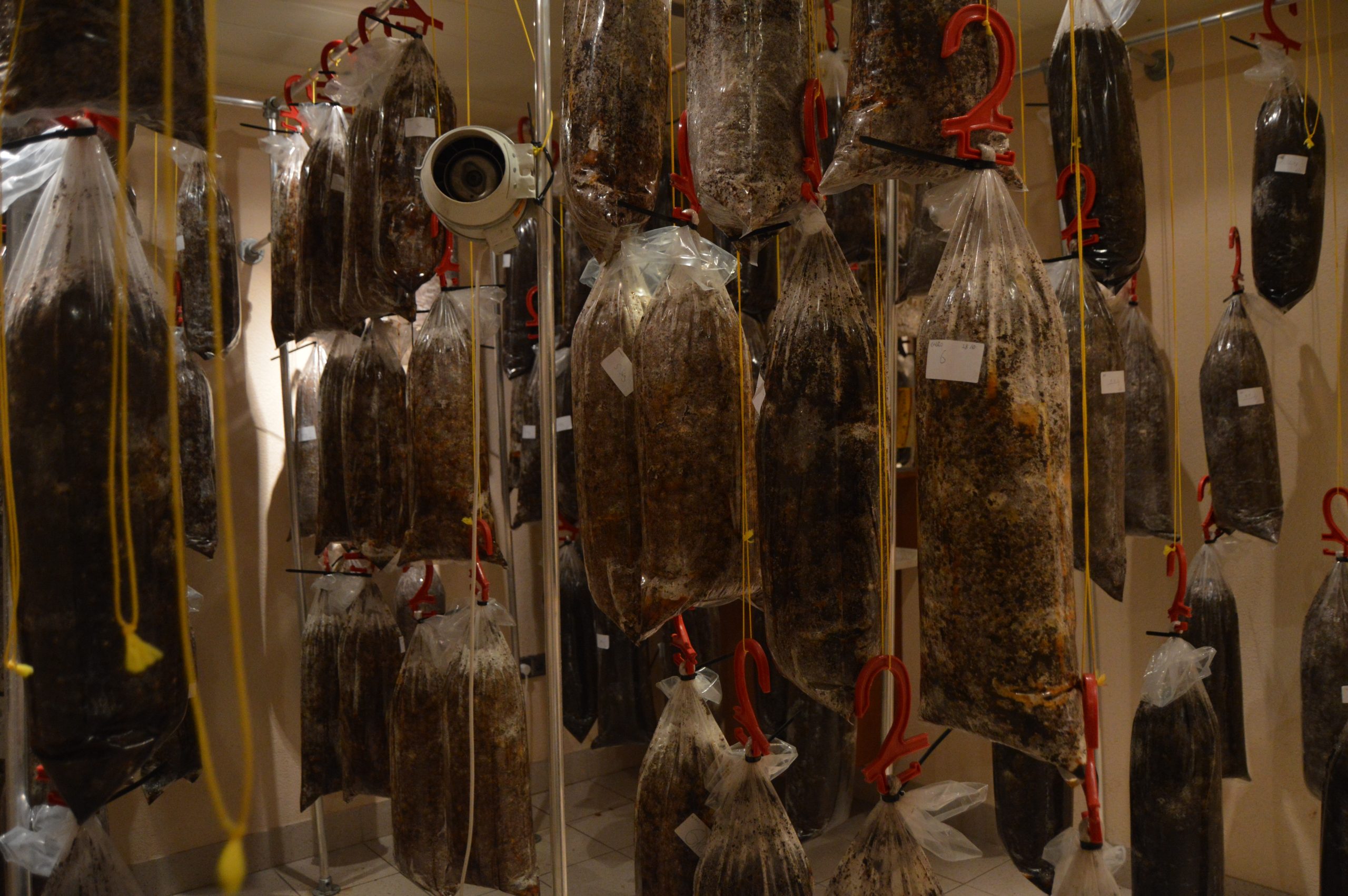
A practical guide to mushroom substrates: what straw, hardwood sawdust, logs, and coffee grounds offer, which mushrooms use them, and why preparation matters.
A mushroom substrate is the material mycelium uses as a place to grow and obtain nutrients. The best substrate is not simply the richest material available: it must suit the species, hold an appropriate amount of water, allow air exchange, and be prepared in a way that gives the intended mushroom a fair chance to colonize it. Straw, hardwood sawdust, logs, and spent coffee grounds can all be useful in specific systems, but they are not interchangeable recipes.
Four practical factors matter. First is compatibility: wood-loving species and straw-loving species may perform differently on the same material. Second is moisture: substrate that is too dry limits growth, while waterlogged material leaves too little air space. Third is structure: particles that are too fine can compact, while material that is too coarse may not hold moisture evenly. Fourth is microbial competition. Preparation methods are chosen partly to reduce organisms that could outcompete the mushroom culture.
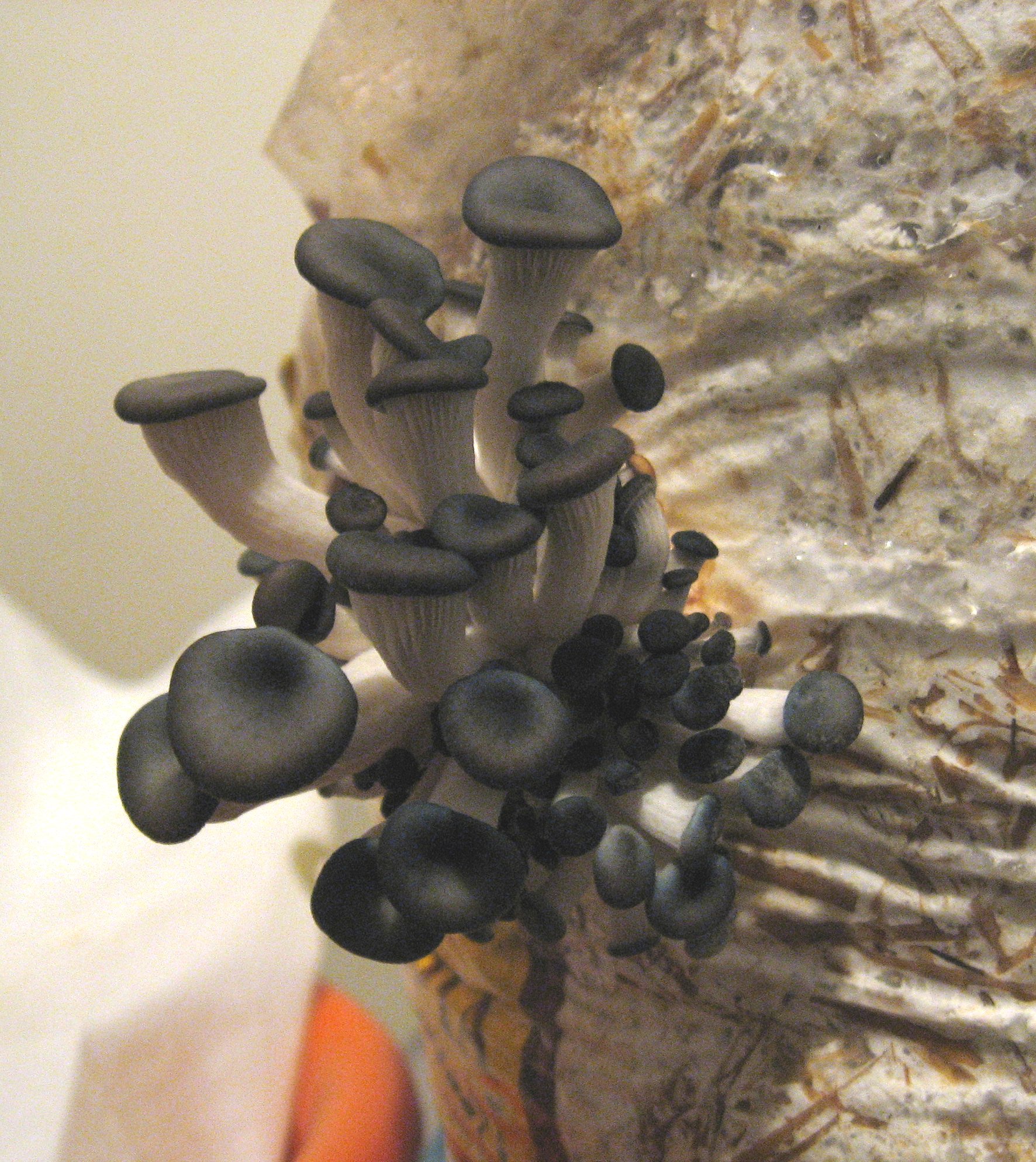
Image source: Biscutella, Wikimedia Commons, public domain.
Clean, untreated straw is a common substrate for many oyster mushroom strains because it is fibrous, holds moisture, and can be prepared in small or large batches. Chop it to a manageable length so it packs evenly without becoming a dense, airless mass. Straw quality matters: avoid material that is visibly mouldy, chemically treated in an unsuitable way, or contaminated with oil and other pollutants.
Straw systems often use pasteurization or another validated preparation method. The right procedure depends on the species, scale, and recipe. Drain prepared straw well before inoculation; water dripping freely from a squeezed handful is a warning that it may be too wet. This simple check is not a substitute for a consistent process, but it can help beginners spot obvious excess moisture.
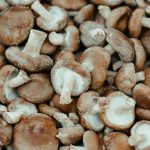
Hardwood sawdust is used for species such as shiitake and lion’s mane, commonly in supplemented blocks. Wood species, particle size, moisture, supplementation, bag filter design, and heat treatment all affect performance. Fine sawdust alone may compact, while an unsuitable wood or a poorly balanced recipe may colonize slowly or produce weak yields. Use a recipe designed for your exact mushroom rather than copying a generic internet formula.
Supplementing sawdust with nutrient-rich ingredients can improve production in a controlled process, but it can also make the substrate more attractive to competing microbes. That is one reason supplemented blocks usually require more careful preparation than a simple low-nutrient substrate. Beginners can reduce variables by purchasing a prepared block before attempting their own recipe.
Logs provide a long-term substrate for compatible wood-decaying mushrooms. They need suitable tree species, a healthy piece of wood, inoculation with an appropriate spawn type, and conditions that avoid excessive drying. Colonization can take months, and fruiting may depend on seasonal conditions. Wood-chip beds are another outdoor approach for certain species, including wine cap mushrooms, but they need the correct spawn and a suitable garden location.
Used coffee grounds are easy to collect and seem like an ideal recycling material, but they are wet, compact readily, and can carry competing microbes. Freshly collected grounds are not automatically sterile. If experimenting, use a small amount, work cleanly, avoid storing damp grounds for long periods, and follow a species-appropriate method. Many growers blend grounds with another substrate rather than relying on grounds alone. Treat the experiment as a learning project, not a guaranteed low-cost production system.
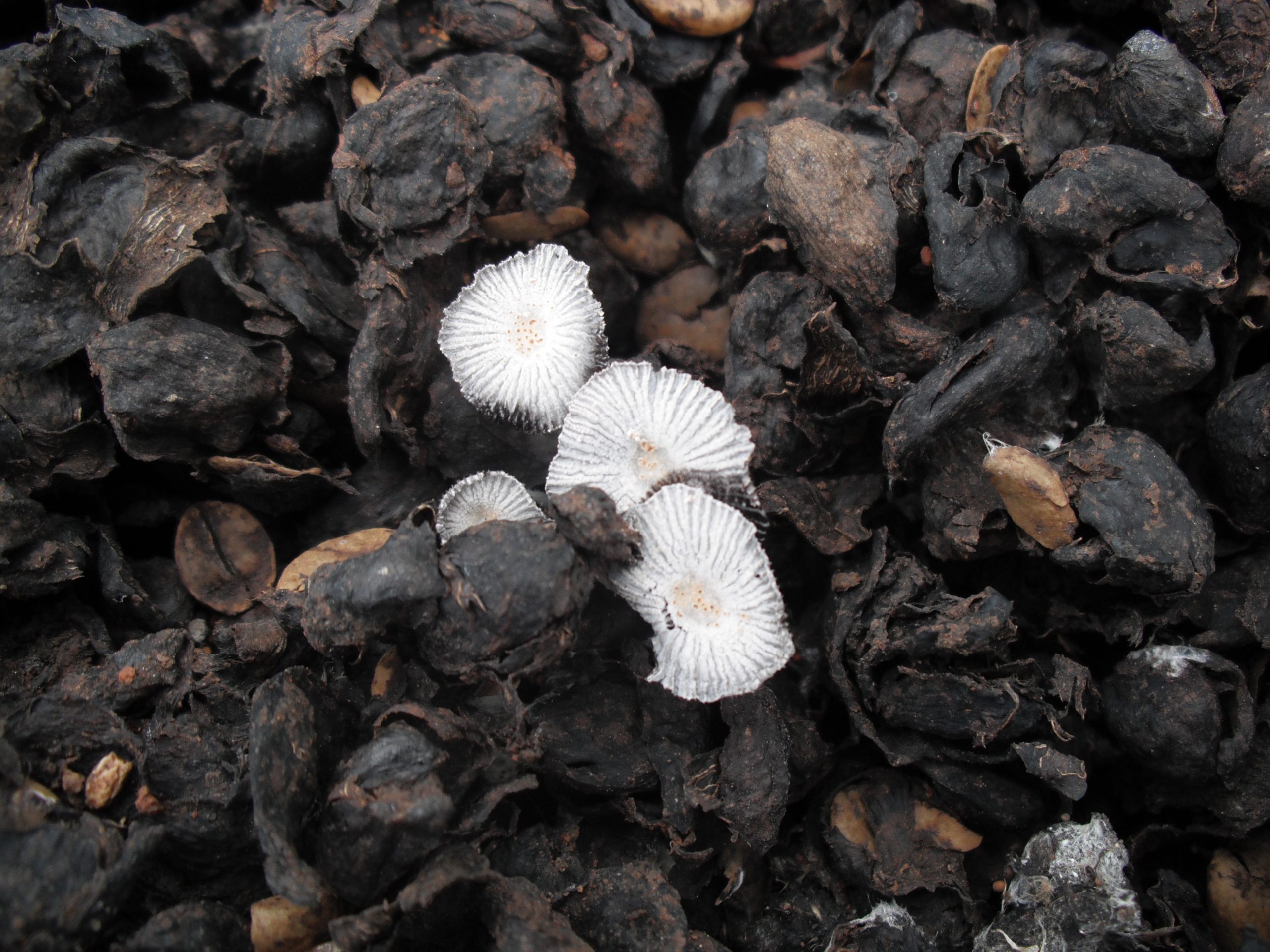
Image source: Smartse, Wikimedia Commons.
These terms describe different levels and methods of microbial control. Pasteurization reduces many competing organisms and is used in some lower-nutrient substrate systems. Sterilization aims for a much higher level of microbial elimination and is commonly used for supplemented sawdust blocks. The correct choice depends on the substrate and cultivation method. Simply heating material for an arbitrary length of time is not a reliable universal recipe; use a validated process suited to the amount and type of material.
| Substrate | Common use | Main consideration |
|---|---|---|
| Straw | Many oyster mushroom strains | Even moisture and suitable pasteurization |
| Supplemented hardwood sawdust | Shiitake, lion’s mane, selected wood-loving species | Species-specific recipe and careful sterilization |
| Hardwood logs | Some shiitake and other wood-decaying species | Wood compatibility, moisture, long colonization period |
| Wood chips | Selected outdoor bed species | Fresh, suitable chips and a compatible strain |
| Used coffee grounds | Small experiments, often as part of a blend | High moisture and contamination risk |
Substrate should be evenly hydrated, not soggy. If water pools at the bottom of a bag or container, drainage and moisture management need attention. Keep raw materials off dirty floors, clean tools between batches, and do not mix a suspect batch into healthy material. Use fresh, correctly identified spawn from a reliable source; substrate quality cannot compensate for weak or contaminated spawn.
Test one variable at a time. If comparing two substrates, use the same strain, similar spawn rate, equivalent container size, and comparable environmental conditions. Record the amount of wet substrate, colonization time, contamination rate, first-flush weight, and total harvest. Report yield relative to the starting substrate weight if you want to compare batches meaningfully. One successful container is not enough to prove that a recipe is consistently better.
Choose substrate based on the mushroom and the method you can manage reliably. Straw can be approachable for oyster mushrooms; hardwood sawdust blocks offer more control but require a suitable recipe and preparation; logs reward patience; and coffee grounds are best approached as a careful experiment. For practical species guidance, read our oyster mushroom guide, shiitake overview, and lion’s mane guide.
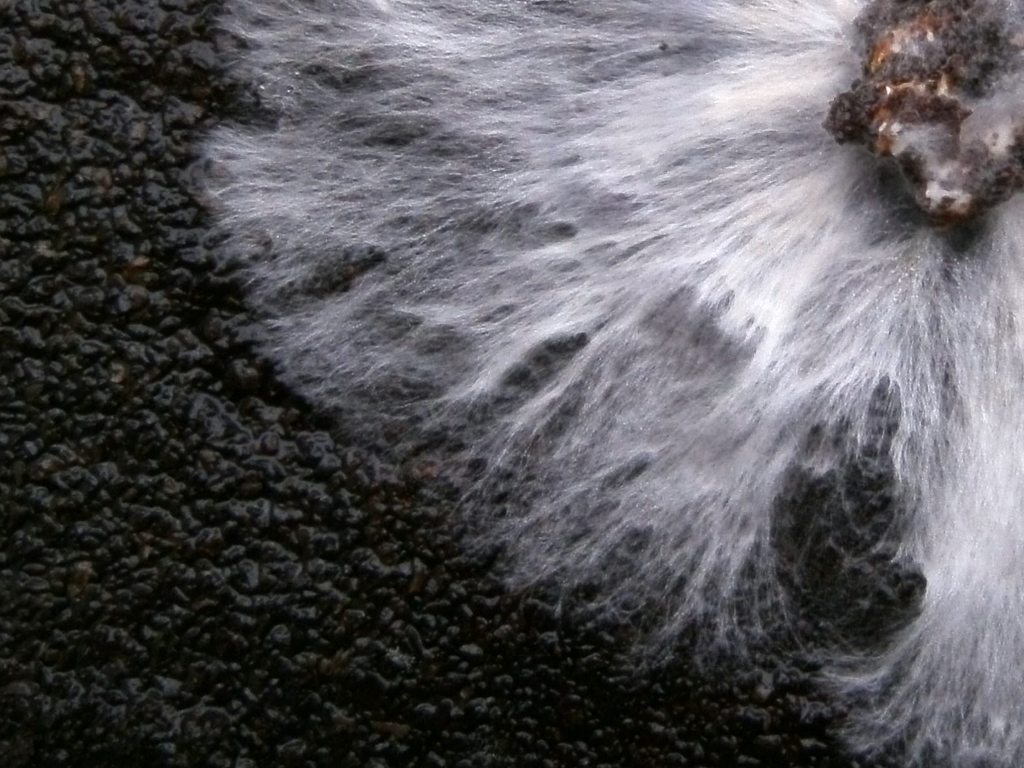
Image source: Tobi Kellner, Wikimedia Commons, CC BY-SA 3.0.



[…] used for many gourmet mushrooms. If you are not sure which base material to use, our guide to mushroom substrates compares the common […]
[…] For general background on preparing growing materials, see our guide to mushroom substrates. […]