Physical Address
304 North Cardinal St.
Dorchester Center, MA 02124
Physical Address
304 North Cardinal St.
Dorchester Center, MA 02124

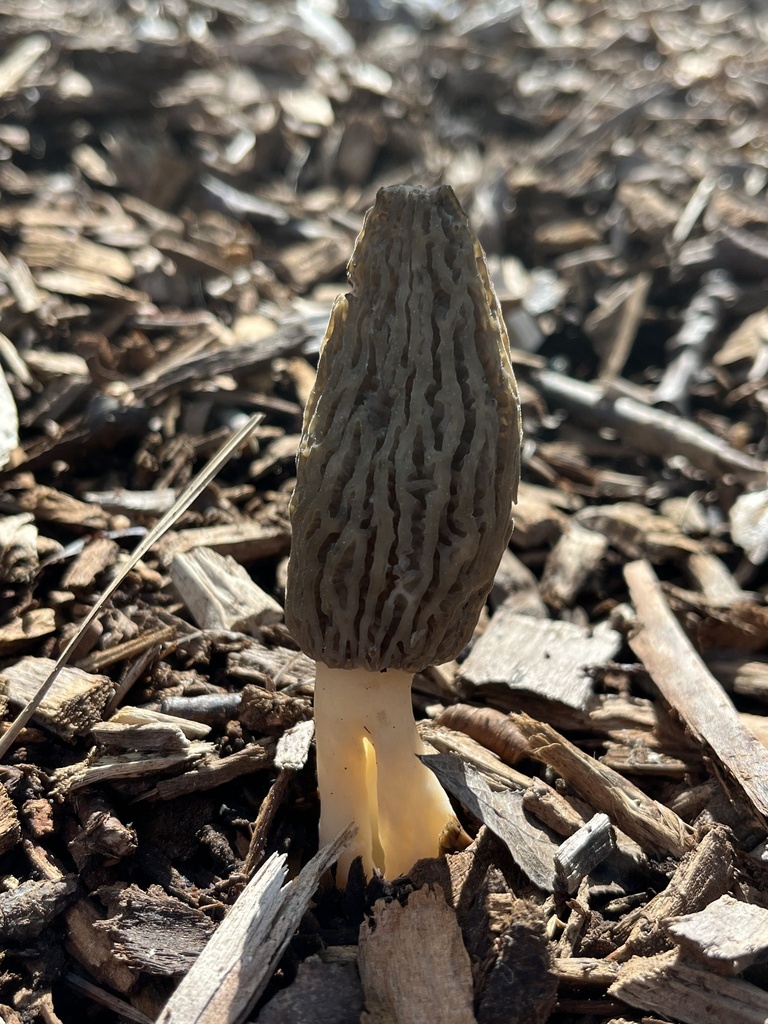
Can you grow morels at home? Here's how Chinese farms grow them in soil beds, what a US research programme found when farmers tried it, and how to run a realistic small trial.
Morels are the mushroom most foragers dream of growing in the back garden. Kits and “morel habitat” spawn are easy to find online, and the idea is irresistible. But morel cultivation is very different from growing oyster or shiitake, and the honest answer to “can I grow morels at home?” is: you can try, but even well-run research trials often fail.
This article explains how morels are grown commercially in China, what a recent US research programme found when farmers tried the same approach, and what that means if you want to experiment yourself. It’s a cultivation guide, but it’s also a reality check, because the evidence is clearer than the marketing.
Most cultivated mushrooms are decomposers that fruit reliably from a block of sawdust or straw. Morels (Morchella species) have a more complicated life cycle. A 2017 review in Critical Reviews in Biotechnology by Liu and colleagues names two key phases in morel development: the formation of sclerotia (hardened food-storage masses of mycelium) and the production of conidia (asexual spores). It also describes supplying “exogenous nutrition” as “the most important breakthrough in the field of morel cultivation”, though the authors say the mechanism behind it is still unclear.
A 2023 systematic review by Li and colleagues in Frontiers in Nutrition sums up why progress was so slow. It points to morels’ strict needs for temperature, humidity, light, pH and soil microbes. The same review says yields “are usually unstable” because of genetic instability and complex reproductive conditions.
| When | What happened |
|---|---|
| 1980s | Ower and colleagues achieved a cultivation breakthrough using sclerotia and added nutrients, according to Li and colleagues |
| Up to 2008 | Indoor morel production in the United States was abandoned, with low output and bacterial contamination among the problems (Li et al. 2023) |
| 2012 | Commercial outdoor soil cultivation began in China (Li et al. 2023) |
| 2016 | Chinese morel farms covered more than 2,600 hectares, up from about 200 (Li et al. 2023) |
| 2020 to 2023 | Michigan State University ran a SARE-funded programme to test outdoor morel growing with farmers in the US North Central region |
The species matter too. China’s farms grow black morels such as Morchella importuna, M. sextelata and M. eximia, and Li and colleagues report that M. importuna accounts for more than 80% of the growing area. The morel in Ower’s early work was published as M. esculenta but is now described as M. rufobrunnea.
The Chinese method is a field crop rather than an indoor block. A 2024 study by Liu and colleagues in the Journal of Fungi on M. sextelata in a pear orchard shows the typical steps:
The bag recipe and density matter. In that study, a bag mix of 48% wheat grain, 30% corn cob, 10% cottonseed hull, 10% wheat bran, 1% lime and 1% gypsum was used as the standard. Six bags per square metre gave the best yield in the density trial, at 327.81 g of fresh morels per square metre. Bag formulas that included pear sawdust did even better, reaching up to 372.91 g per square metre.
Even in China, results vary enormously. The 2017 review reports field yields “from 0 to 7,620 kg per hectare” across Chinese provinces. The 2023 review gives a highest reported yield of 15,000 kg per hectare.
From 2020 to 2023, Michigan State University, led by Gregory Bonito, worked with farmers in Michigan, Indiana, Illinois and Wisconsin to test the outdoor method. The SARE final report and a 2024 paper in Plants, People, Planet by Lee, Swinton and Bonito describe the results.
The researchers identified several problems that any home grower should expect:
There were bright spots. Growers tackled mould by increasing ventilation under the row plastic as morels began to grow. All the farmers who planted M. rufobrunnea sclerotia got at least some morels, with a quicker flush of about one to two months, although yields were low and variable. The researchers suggest that growing in greenhouses, high tunnels or hoop houses, which reduce swings in heat and moisture, could improve yields and consistency.
If you enjoy experiments and can accept a likely failure, a small morel bed can be a fun project. Treat it as a trial, not a harvest plan. Based on the research above:
| Do | Avoid |
|---|---|
| Start in autumn, using spawn from a supplier that names the species | Expecting a reliable crop in the first spring, or any spring |
| Prepare loose, tilled soil, and check the pH; the US trials aimed for about 7.0 | Planting into acidic, compacted or waterlogged soil |
| Add grain-based nutrient bags once mycelium shows on the surface | Leaving nutrient bags exposed to rodents without protection |
| Shade the bed and keep moisture steady through spring | Letting the bed dry out, or cooking it under unventilated plastic on warm days |
| Rotate to fresh ground after a season or two | Replanting the same soil year after year |
If you decide to try, keep the experiment small and record what you do, so a failure still teaches you something.
For general background on preparing growing materials, see our guide to mushroom substrates.
A wine cap bed is a far more dependable outdoor project. If you want a garden mushroom bed with a much better chance of producing, see our guide to growing wine caps in garden beds. For other species suited to the season, see spring mushrooms to grow and forage.
If your bed does produce, the usual morel rules apply. Make sure every mushroom really is a true morel, because false morels can appear in the same places and are dangerous. Our guide to telling true morels from false morels covers the key differences. Morels should always be cooked before eating. Never rely on a photo or a description alone. If you are unsure about any mushroom that appears in your bed, have it checked by an experienced local identifier. For more on the wild mushroom itself, read why foragers love morels.
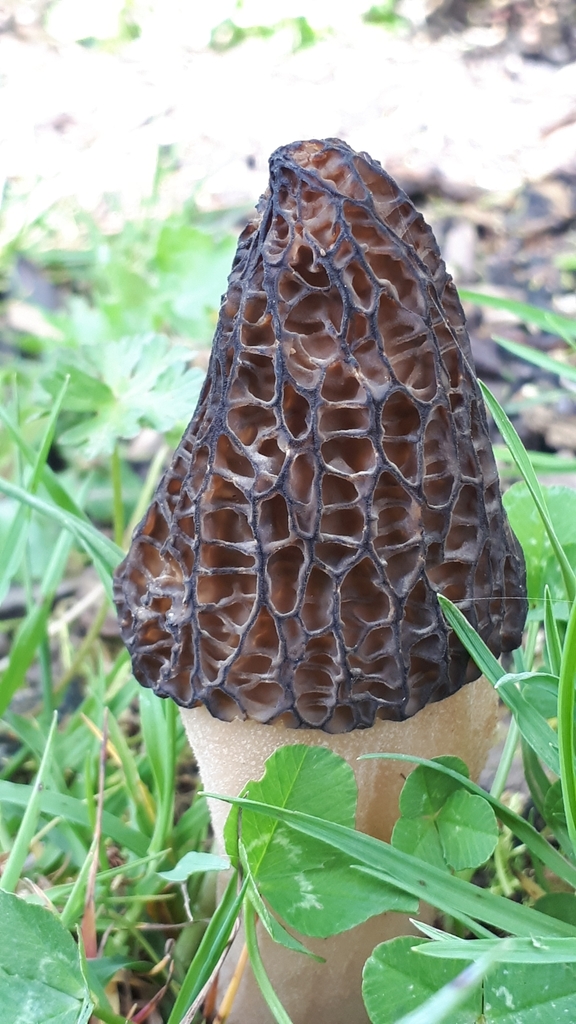
Featured image: black morel by Tom Erler via iNaturalist (CC0 1.0). Inline photo by Claude Pepin via iNaturalist (CC0 1.0).