Physical Address
304 North Cardinal St.
Dorchester Center, MA 02124
Physical Address
304 North Cardinal St.
Dorchester Center, MA 02124

A still air box keeps air still; a laminar flow hood blows filtered air over your work. Here's how each works, what they cost, the key flow hood specs, safety points, and which one a home grower needs.
Every mushroom grower eventually runs into the same problem: mould. You sterilise a jar of grain or pour an agar plate, open it for a few seconds to add a culture, and a week later it is green. Most of the time, the contamination came from the air around you, from your hands or from the tools you used.
That’s why serious growers do their sterile work in a cleaner space. For home growers there are two main options: a still air box (SAB) and a laminar flow hood. This guide explains how each one works, what it costs, what jobs it suits, and how to use it well. It is a buyer’s and user’s guide in one.
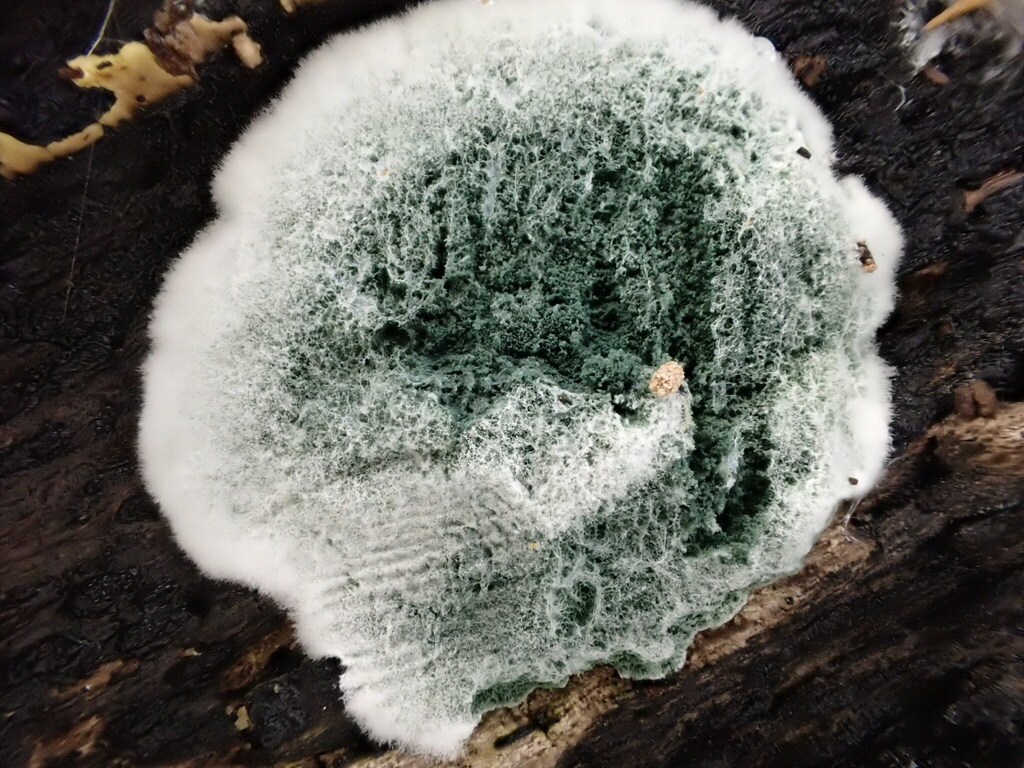
Moulds and bacteria are everywhere, and their spores are tiny. Penn State Extension’s guide to green mould shows how much damage one contaminant can do. Trichoderma moulds cause green mould in button mushroom farms, and Penn State reports crop losses of 30 to 100% in Pennsylvania between 1994 and 1996. It also notes that green mould causes significant yield losses in shiitake and oyster mushrooms. On farms, the mould seemed to arrive mainly through contaminated workers and equipment.
A home grower is not running a farm, but the principle is the same. The moments when sterile material is open to the room are when contamination gets in. A clean workspace aims to reduce what can land on your work during those moments. Our contamination guide covers how to recognise the common moulds once they appear.
A still air box is a clear, enclosed box with holes for your arms. You work inside it with the lid closed. North Spore, which sells a fold-up version called the NocBox, describes the principle as “limiting air turbulence and providing a clean working environment.” The idea is simple: spores and dust drift on air currents. If the air inside the box is still, fewer of them move around and land on open plates or jars.
A still air box is the budget option. North Spore describes it as a simple, inexpensive alternative to a flow hood. Many growers make their own from a large clear plastic storage tote by cutting two arm holes in one long side. The only real requirements are that the tote is clear enough to see through and big enough to hold your work and move your hands.
North Spore’s instructions for its NocBox give a good general routine:
Alcohol vapour is flammable, and a closed box traps it. North Spore does not recommend flame sterilising inside its NocBox, and warns: “if your NocBox is sealed, alcohol vapors will not be able to leave the NocBox and will cause an explosion risk if any heated element or flame is introduced.” The same caution applies to any homemade box. Let alcohol evaporate fully and let the vapour clear before using any flame or heated tool, or sterilise tools outside the box.
North Spore lists tasks it suits, including:
Its main limits are space and comfort. You work through holes with restricted movement, and large bags or many plates soon fill the box.
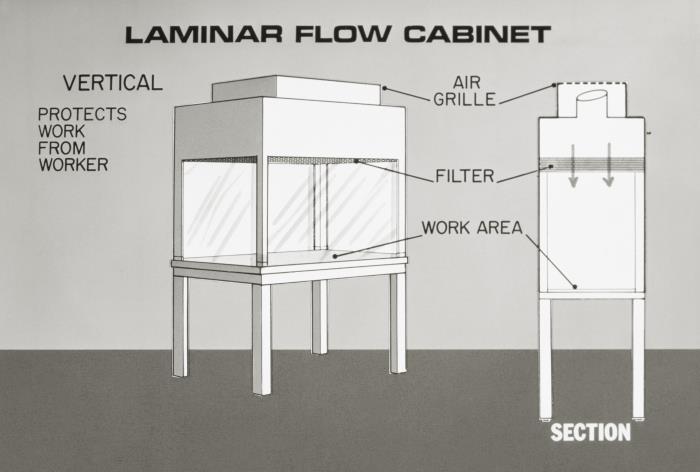
A laminar flow hood takes the opposite approach. Instead of keeping the air still, it blows a steady stream of filtered air across the work surface. GroCycle’s guide to building one explains that the air passes through a HEPA filter and then “moves in parallel lines vertically or horizontally across the work surface”, pushing contaminants away from your work.
| Specification | What GroCycle recommends |
|---|---|
| Filter | H13 or H14 HEPA, which “remove more than 99.97% of particles at 0.3 microns” |
| Filter depth | At least 3 inches (75 mm) for steadier airflow |
| Air speed at the filter face | About 100 feet per minute (0.5 metres per second) |
| Fan size | Filter area multiplied by air speed. For a 2 × 2 ft filter: 4 sq ft × 100 ft/min = 400 cubic feet per minute |
| Pressure | Total resistance of about 1.0 to 1.2 inches of water with a prefilter, so choose a fan that delivers enough air at that pressure |
| Working size | At least 2 × 2 ft (61 × 61 cm) for inoculating substrate bags |
| Filter life | About 3,000 to 5,000 hours of use. Change the prefilter at least yearly |
GroCycle also notes that both too much and too little airflow create turbulence, which shrinks the clean area in front of the filter. It suggests horizontal units for bulk substrate bags and vertical cabinets for agar and liquid culture.
Commercial hoods are not cheap. For example, North Spore sells a 26 × 26 inch mycology flow hood for $650 (price checked in October 2026). Its product page lists a variable speed dial and suggests checking that the airflow is smooth with light smoke or a tissue.
A DIY hood can work, but it isn’t automatically cheaper. GroCycle says that labour and materials for a home build “could easily exceed the price of a pre-made unit”. A DIY build needs a solid box of plywood or MDF, a sealed plenum behind the filter, a suitable fan and a prefilter. GroCycle stresses sealing every joint with silicone so that air only leaves through the filter. An older Make: magazine project by Philip Ross takes a simpler route and builds a small hood from a household air purifier fitted into a sealed plastic box.
This point is often missed. The University of Delaware’s environmental health and safety office describes a laminar flow clean bench as a device that blows HEPA-filtered air across the work surface towards the user. It says such benches “protect the product or research from contamination, but they do not protect personnel or the environment.” A flow hood is not a biosafety cabinet, so never use it to contain anything hazardous. And if you work with a lot of spores, remember the air is blowing towards your face.
| Still air box | Laminar flow hood | |
|---|---|---|
| How it works | Keeps the air still so particles stay put | Blows HEPA-filtered air over the work |
| Cost | Low. A homemade tote costs little | Often hundreds of pounds or dollars |
| Space | Small, enclosed and cramped | An open bench, easy to work at |
| Best for | Occasional agar plates, jars and grain bags | Regular agar work, cloning, many bags at once |
| Main risks | Moving air with your arms; alcohol vapour trapped near flames | Poor airflow from a bad build; blows spores at the user |
If you are new to sterile work, start with a still air box. It is cheap, it teaches good habits, and it is enough for many home growers. Our guide to agar and liquid culture describes the kind of work it suits.
Consider a flow hood if you are pouring agar every week, making lots of grain spawn, or tired of working through arm holes. Whichever you use, it only works alongside properly sterilised materials. A clean workspace cannot rescue a jar that wasn’t sterilised in the first place, as our article on sterilisation versus pasteurisation explains.
Featured image: Trichoderma viride by T. Pedro Hafermann via iNaturalist (CC0 1.0). Inline illustration: CDC/Joseph Barker, CDC Public Health Image Library (public domain).