Physical Address
304 North Cardinal St.
Dorchester Center, MA 02124
Physical Address
304 North Cardinal St.
Dorchester Center, MA 02124

The zombie-ant fungus behind The Last of Us can't infect people, experts say. But drug-resistant fungi, climate change and wildlife diseases are real concerns. Here's what's fact and what's fiction.
In The Last of Us, a fungus jumps from insects to people and turns most of humanity into aggressive, fungus-covered hosts. The show made millions of viewers ask the same question: could that actually happen?
The short answer from experts is no, not with the fungus that inspired the story. But the show did point at something real. Fungal threats to people and wildlife are growing, and scientists are paying close attention. This article separates the fiction from the facts.
The fungus in the show is based on Ophiocordyceps, often called the zombie-ant fungus. NPR describes how it infects insects such as ants. It drains its host of nutrients, fills its body with spores and makes the insect climb to a high spot and stay there. Spores then rain down on other insects nearby.
Scientists still don’t fully understand how the fungus controls its host. According to NPR, ideas include physical changes to the muscle fibres, possible growth into the brain and chemical attacks.
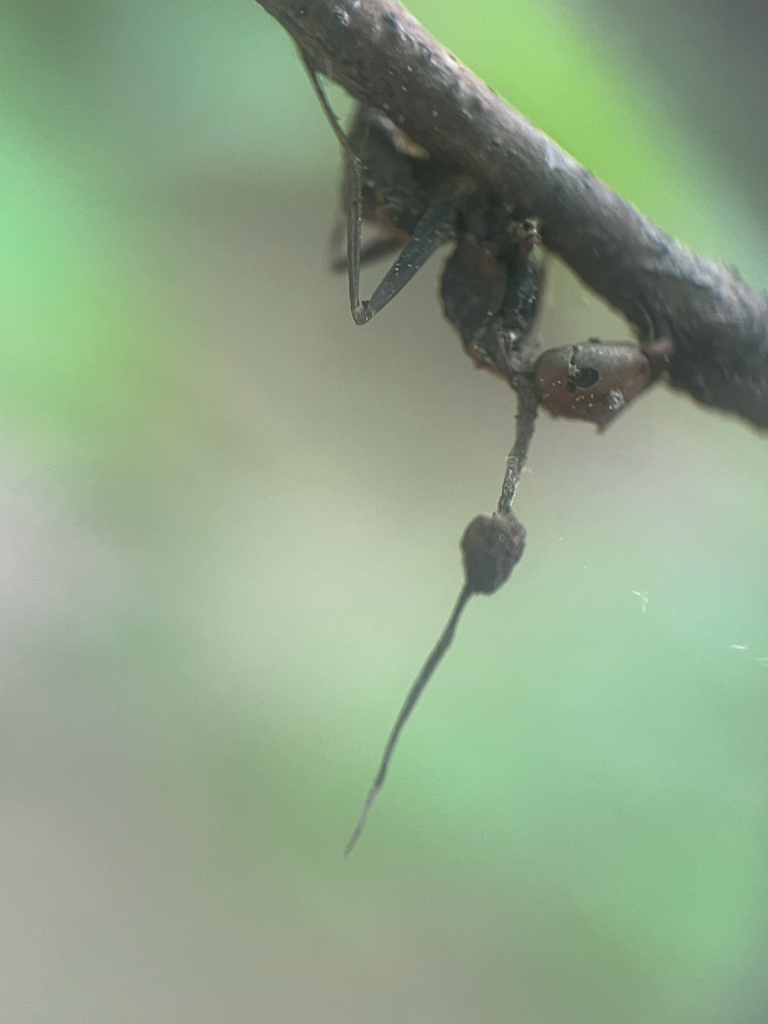
Our photo shows a North American species, Ophiocordyceps kimflemingiae, with the typical look: a dead ant clamped to a twig, with a thin fungal stalk growing from its head.
Ophiocordyceps is related to the Cordyceps fungi sold in supplements. If you’ve seen “cordyceps” on a product label, our article on cordyceps supplements explains what’s actually inside them.
Experts are clear on this point.
| Question | What experts say |
|---|---|
| Can Ophiocordyceps infect people? | Tom Chiller, chief of the CDC’s Mycotic Diseases Branch, told Scientific American: “There is zero correlation with that fungus in humans.” |
| Does it infect any warm-blooded animals? | Scientific American reports that no Ophiocordyceps species infects fish, amphibians or mammals |
| Why not? | Mycologist Bryn Dentinger told NPR that “Our body temperatures are high enough that most organisms, their proteins would denature at that temperature” |
| Could it jump from ants to people? | Dentinger called it “unlikely”, because “we’re so different” |
| Is the show’s spread realistic? | NPR notes that the fungus doesn’t usually infect through the mouth, and infected hosts aren’t linked in a network |
Chiller summed up the show’s premise as “far-fetched”, adding: “That’s just not going to happen.”
That point about temperature is important. Scientific American explains that most fungi can’t survive the high temperature inside a warm-blooded body. In effect, our body heat acts as a shield against most fungal species.
But that shield isn’t perfect, and this is where the real concern lies.
Chiller told Scientific American that some fungi have already adapted to human body temperature, and that a warming climate may help others do the same. Asked whether fungi can adapt to new hosts, he said: “There’s no question. We see this now.” NPR’s report makes a similar point: climate change may be helping some fungi tolerate higher temperatures. None of these infections involve Ophiocordyceps.
The CDC has a page dedicated to climate change and fungal diseases. It explains that most fungi can’t survive at human body temperature, but that shifting temperatures may cause some to adapt to warmer conditions, “including the human body”. It warns that new fungal diseases could emerge as a result.
The CDC also highlights other ways a changing climate can affect fungi:
| Change | Possible effect, according to the CDC |
|---|---|
| Warmer, wetter conditions | Some fungi may survive in new areas. Coccidioides, which causes Valley fever, is usually found in the southwestern US, parts of Mexico and Central and South America, but was documented in Washington state in 2015 |
| Storms, droughts and wildfires | Can promote the growth and spread of fungal spores, carrying them to new places |
| Flooding | Adds moisture that can lead to mould growth indoors |
| More fungicide use on crops | May increase antifungal resistance, including triazole-resistant Aspergillus |
The CDC’s practical advice includes learning which fungal diseases occur where you live, asking your doctor about testing for fungal infections, and not using over-the-counter antifungal medicines without a diagnosis.
The fungus that worries health officials most is not a mushroom or an ant parasite but a yeast called Candida auris. It was first reported in 2009 and, according to Scientific American, has spread to more than 50 countries. Chiller described it as “probably here to stay”.
A 2026 CDC surveillance report shows how quickly it has grown in the United States:
| Year | Clinical cases of C. auris in the US (CDC) |
|---|---|
| 2022 | 2,882 |
| 2023 | 4,428 |
| 2024 | 6,197 |
The report also counted 12,432 screening cases in 2024, where people carried the yeast without an active infection. It concludes that “C. auris remains a critical public health concern in the United States” and says the continued rise “underscores ongoing transmission in health care settings”. Earlier studies cited in the report found high death rates, between 30% and 72%, for bloodstream infections. The surveillance system itself doesn’t record patient outcomes.
The CDC report links its spread to health care settings. It has nothing to do with mushrooms, gardens or foraging.
In October 2022, the World Health Organization published its first list of fungal “priority pathogens”, ranking 19 fungi in critical, high and medium priority groups. WHO’s reasons include:
Dr Hanan Balkhy, a WHO Assistant Director-General, put it this way: “Emerging from the shadows of the bacterial antimicrobial resistance pandemic, fungal infections are growing”. WHO says those most at risk include people with cancer, HIV/AIDS, organ transplants, chronic lung disease or a history of tuberculosis.
There are currently no vaccines against fungal infections. Chiller told Scientific American he was cautiously optimistic that vaccines for Candida and Valley fever could arrive within a few years, but noted that drug companies have shown little interest, so government support is needed.
If you want a true story of a fungus causing mass deaths, look at wildlife.
| Disease | Fungus | Who it affects | Impact |
|---|---|---|---|
| White-nose syndrome | Pseudogymnoascus destructans | Hibernating bats in North America | USGS says “millions of insect-eating bats” have died, with the disease found in at least 40 US states and eight Canadian provinces |
| Chytridiomycosis | Batrachochytrium dendrobatidis and B. salamandrivorans | Frogs, toads and salamanders worldwide | A 2019 study in Science linked it to declines in 501 amphibian species, including 90 presumed extinctions |
White-nose syndrome is named after the white fungus that grows on bats’ muzzles, ears and wings in cold, humid caves. The USGS National Wildlife Health Center says infected bats “experience a cascade of physiologic changes that result in weight loss, dehydration, electrolyte imbalances, and death.” It reports declines of more than 90% in northern long-eared, little brown and tri-colored bats, and says 12 bat species in North America have been confirmed with the disease. Because bats save farmers billions of dollars a year in pest control, according to USGS, these losses matter for people too. USGS says the disease spreads mainly from bat to bat, though people can carry the fungus between caves on clothing and gear. It states that “there have been no reported human illnesses attributable to WNS.”
The amphibian chytrid story is even bigger. Ben Scheele, who led the 2019 study, said: “Globalization and wildlife trade are the main causes of this global pandemic and are enabling the spread of disease to continue.”
These are the closest real-world parallels to The Last of Us: fungi spreading through populations with devastating results. But they affect animals, not people.
For most people, the honest answer is no more than before. Here’s a sensible way to think about it:
Some fungi even help clean up the mess humans make, as our articles on fungi and plastic and mycoremediation show.
The fungus in The Last of Us is real, but it controls insects, not people, and experts say it can’t make the jump to humans. The real fungal story is quieter but more important: drug-resistant fungi like Candida auris are spreading in hospitals, warming may help some fungi tolerate our body heat, and fungal diseases have already devastated bats and amphibians. That’s why WHO is calling for better tests, treatments and surveillance.
Featured image: zombie-ant fungus by Phillip Salzinger via iNaturalist (CC0 1.0).