Physical Address
304 North Cardinal St.
Dorchester Center, MA 02124
Physical Address
304 North Cardinal St.
Dorchester Center, MA 02124

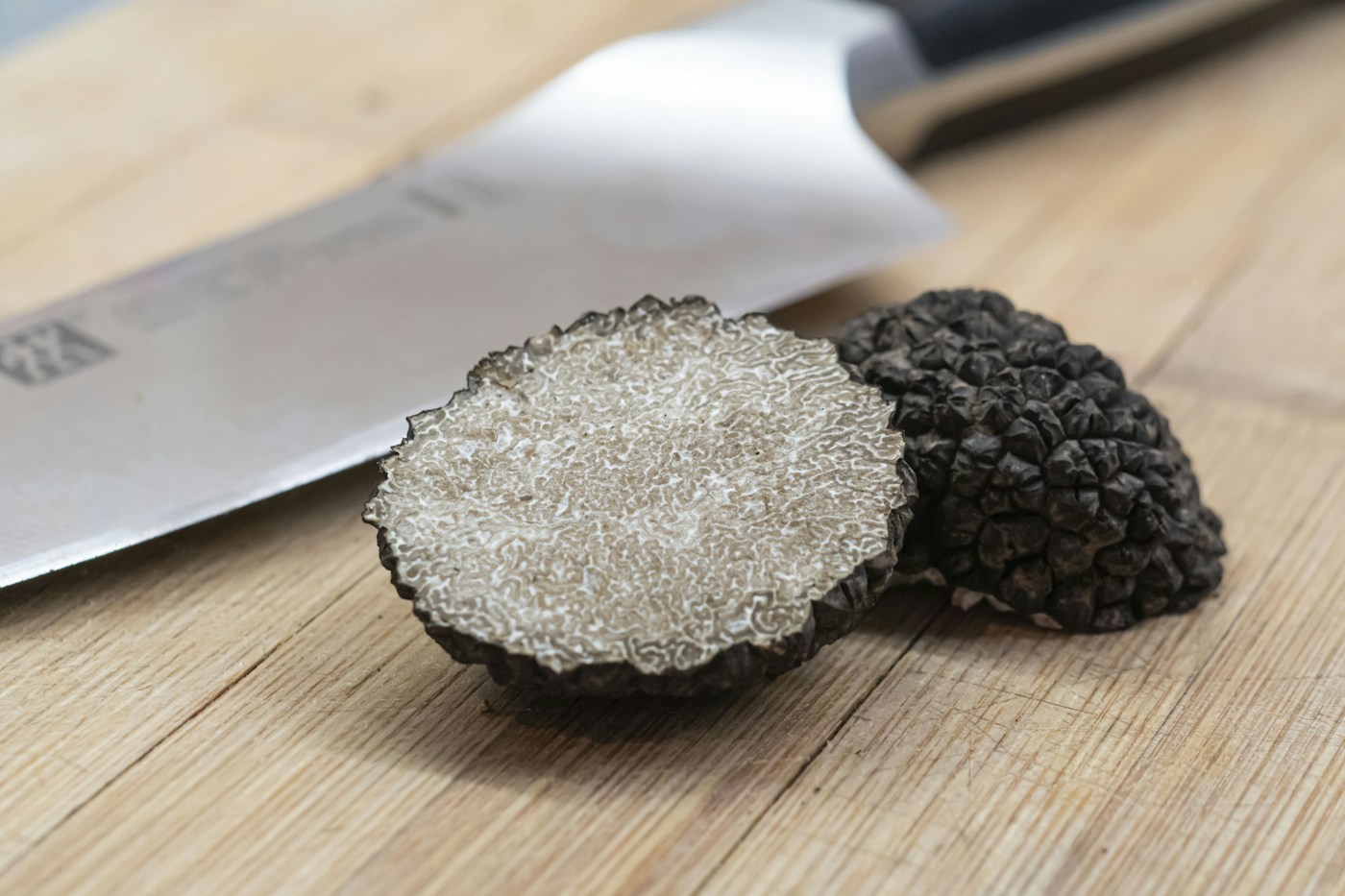
Learn what culinary truffles are, why black and white truffles command high prices, how trained dogs find them, how to store them, and how to use them in cooking.
Truffles is the focus of this practical guide. Learn about its appearance, flavor, preparation, storage, and common questions. Wild mushroom identification requires qualified local expertise; this article is educational and does not replace expert identification or medical advice.

Culinary truffles are underground fungi that form partnerships with the roots of certain trees. Many prized truffles belong to the genus Tuber. Unlike mushrooms that rise visibly above the soil, truffles develop underground and are usually found with the help of trained dogs or, in some regions, traditional harvesting methods.
The underground growth habit is central to their story. A truffle’s aroma helps attract animals that dig it up and disperse its spores. Humans have learned to recognize those aromas and harvest the fungi, but finding them depends on habitat, climate, host trees, soil conditions, seasonal timing, and the skill of the searcher.
Truffles are expensive not simply because they are fashionable. They can be difficult to locate, seasonal, perishable, and inconsistent in supply. Their strongest examples can add a distinctive aroma to a dish in very small quantities, which is why restaurants often shave them over simple foods rather than bury their flavor in complex sauces.
The word “truffle” covers multiple species with different aromas, seasons, regions, and culinary uses. The black Périgord truffle (Tuber melanosporum) is known for a deep, earthy aroma and is often used in warm dishes. The prized white truffle (Tuber magnatum) is especially aromatic and is commonly shaved raw or nearly raw over warm foods so its fragrance is not lost through prolonged cooking.
These are not interchangeable ingredients. White truffles are associated with parts of Italy and neighboring regions, while black truffles are harvested and cultivated in several countries. Their prices vary with harvest quality, season, origin, supply, and market demand. Other truffle species may be sold at lower prices, and their aroma can be quite different.
A label should identify the product clearly. If a jar says “truffle flavor” or lists truffle aroma without much actual truffle, it may be a flavored product rather than a substantial quantity of fresh truffle. That is not automatically bad, but buyers should understand what they are paying for. Species names and ingredient lists matter more than a luxury-sounding label.

First, truffles are hard to find. They grow underground, and their distribution is patchy. A suitable woodland does not guarantee a harvest; a productive area can yield very different amounts from one season to the next. Drought, heavy rain, heat, cold snaps, and changes in host trees can all influence production.
Second, harvesting is skilled work. Truffle hunters must know the local habitat and season, handle trained dogs, recognize ripe truffles, and avoid damaging the site. The time and travel involved are part of the cost. After harvest, the fungi must be sorted, cleaned carefully, transported, and sold quickly because fresh truffles lose aroma and quality over time.
Third, demand is concentrated around a relatively small seasonal supply. Restaurants, specialty retailers, and consumers may compete for the best specimens. Prices can rise sharply when the harvest is weak or a particularly aromatic batch becomes available. The price per gram is therefore not fixed; it changes with species, grade, freshness, origin, and market conditions.
Finally, truffles are sold as a luxury ingredient. Their reputation and the experience of shaving them at the table add value, but branding alone does not tell you whether a product is fresh or high quality. Ask about species, origin, harvest date, storage, and whether the item is a whole truffle, preserved truffle, or flavored condiment.
Truffle hunters often use trained dogs because dogs can detect the distinctive aroma of ripe truffles. The handler works through suitable habitat, watches the dog’s behavior, and carefully excavates the soil where the dog indicates. Training helps the dog focus on the desired scent and allows the handler to avoid unnecessary digging.
Historically, pigs were used in some truffle-hunting traditions because they are attracted to truffle aromas. Dogs are common in many areas because they are easier to handle and can be trained not to eat the find. Local practices and rules vary, and harvesting may be regulated to protect truffle grounds and woodland ecosystems.
A productive truffle habitat often involves specific host trees and soil conditions. Different truffle species associate with different tree types and climates, so knowledge of the landscape matters. Truffle cultivation is possible in some settings by establishing suitable host trees inoculated with the target fungus, but it requires long-term planning and does not guarantee a quick harvest.

Truffle aroma is a complex mixture of volatile compounds. Different species produce different aromatic profiles, and the scent changes as the truffle matures, is stored, or is heated. This is why a fresh, well-handled truffle can smell very different from a jar of truffle-flavored oil.
The aroma is often described as earthy, nutty, garlicky, musky, or cheese-like, but individual perception varies. A small amount can be noticeable because the compounds are volatile and reach the nose readily. Heat can release some aromas but may also drive off delicate compounds, so cooking methods are chosen according to the species.
Truffle oils and seasonings can provide a recognizable aroma at a lower cost, but many products rely on added flavor compounds rather than a large amount of truffle. Read the ingredient list and do not assume the word “truffle” means the product contains the same complexity as a fresh specimen. A flavored condiment can be useful, but it is a different product.
Simple dishes let truffle aroma stand out. Fresh truffle may be shaved over warm pasta, risotto, eggs, potatoes, or a mild cheese dish. The food should be warm enough to release aroma, but the truffle often does not need prolonged cooking. A sharp, spicy sauce can overpower the flavor.
Use a clean truffle slicer or sharp knife to make very thin slices. Because truffles are costly, thin slices spread the aroma and make it easier to portion. Add them just before serving, or briefly warm them with the dish if the recipe calls for it. A small amount of butter or olive oil can carry the aroma, but too much fat can make a dish heavy.
For a home cook, a modest amount of fresh truffle can elevate a simple plate. If fresh truffle is outside the budget, use a clearly labeled truffle condiment sparingly and treat it as a different ingredient. Avoid buying products that promise the full experience of a premium fresh truffle at a suspiciously low price.
Fresh truffles are perishable. Buy from a specialist who can explain the species, origin, and harvest timing. Look for a firm specimen with a characteristic aroma and no signs of rot or excessive wetness. Some surface soil is normal, but the truffle should not smell sour or unpleasant.
Store fresh truffles according to the seller’s advice, usually refrigerated and protected from excess moisture. They are often wrapped in absorbent paper in a clean container, with the paper changed as it becomes damp. Storage recommendations vary by species and condition, so do not assume a truffle will remain at peak aroma for weeks.
Clean a truffle shortly before use with a soft brush and only a small amount of water if needed, then dry it thoroughly. Avoid soaking it. Slice only what you need, and use the remainder promptly. If the truffle becomes slimy, develops an off smell, or shows clear signs of spoilage, discard it.
Truffle hunting is not simply a matter of walking through a forest and digging where the soil looks right. You need local knowledge, the right season, an appropriate host habitat, permission to access the land, and often a trained dog. Regulations may restrict collection, and disturbing roots or digging repeatedly can damage the site.
Never eat an underground fungus based only on a photograph or an online description. Not every subterranean fungus is a prized culinary truffle, and correct identification matters. Beginners should learn through a reputable mycological group, local guide, or specialist rather than attempting to identify unknown fungi alone.
Sustainable harvesting leaves the site in good condition and respects property rules. The ecosystem that produces truffles is part of the product’s value, so careful collection benefits both the landscape and future harvests. If you are curious about fungi in the wild, begin with observation and expert-led learning rather than tasting unknown specimens.
Are truffles mushrooms? They are fungi, but they are underground fruiting bodies rather than the familiar above-ground mushrooms sold in supermarkets. Why do they cost so much? Scarce seasonal supply, labor-intensive searching, perishability, and demand all contribute. Are black and white truffles the same? No; they differ by species, aroma, season, and typical culinary use.
Does truffle oil contain real truffles? Some products include truffle pieces or extracts, while others rely mainly on added aroma compounds. Read the label. Can truffles be cooked? Yes, but cooking choices depend on species; delicate white truffles are commonly shaved over warm food, while some black truffles work well in cooked preparations.
Truffles are a fascinating example of how ecology, scent, seasonality, and skilled harvesting shape a food’s price. Their best use is often a simple one: choose a fresh, clearly identified product, handle it gently, and let its aroma complement rather than overwhelm the dish. For related species guides, read about enoki mushrooms, maitake mushrooms, king oyster mushrooms, and wood ear mushrooms. For more familiar species, explore our guides tomorel mushrooms and chanterelles.
Explore more species profiles: oyster mushrooms, shiitake mushrooms, lion’s mane, button, cremini, and portobello mushrooms, and chanterelle mushrooms. Each variety has its own texture, habitat, handling needs, and culinary uses.