Physical Address
304 North Cardinal St.
Dorchester Center, MA 02124
Physical Address
304 North Cardinal St.
Dorchester Center, MA 02124

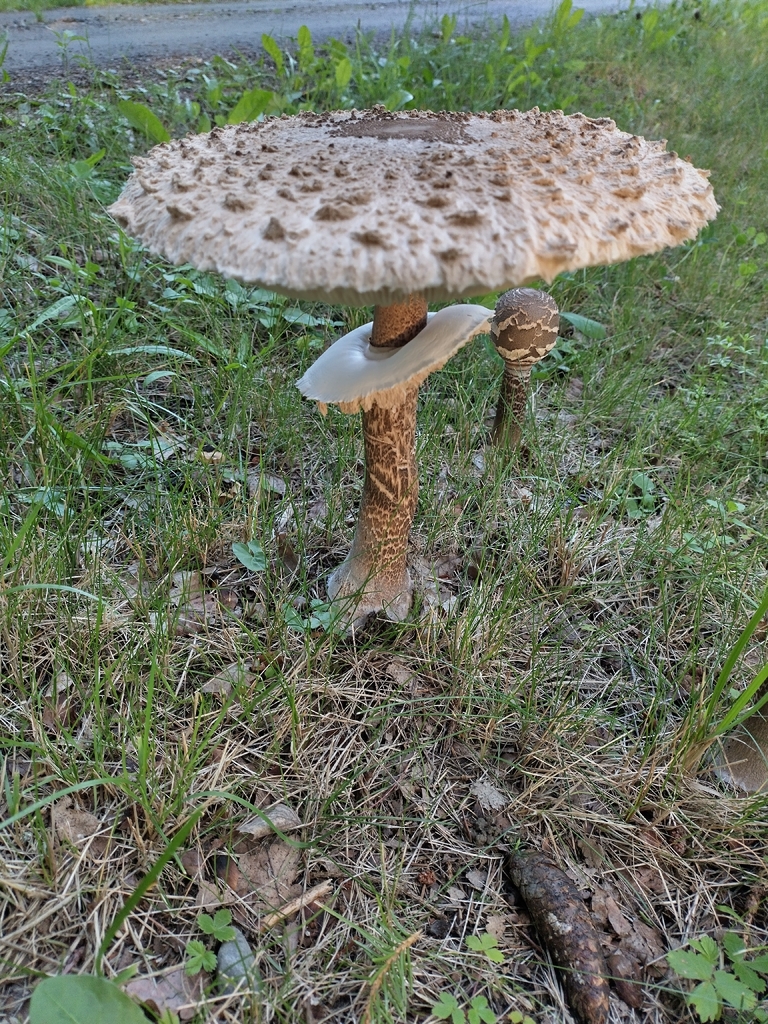
Cap, gills, stem, ring, volva and mycelium: a clear guide to the parts of a mushroom, how they work, and why features like the volva matter for safe identification.
Cap, gills, stem, ring, volva, mycelium: if you’ve ever opened a field guide, you’ve met a whole new vocabulary. Learning the parts of a mushroom is the first step to understanding how fungi live, and it’s essential if you want to describe a find accurately or follow an identification key.
This guide walks through mushroom anatomy from the hidden threads underground to the spores on the gills, explains why each part matters, and shows how features like the ring and volva can be the difference between a safe mushroom and a deadly one.
The first thing to understand is that the mushroom isn’t the whole organism. The Australian National Botanic Gardens (ANBG) explains that when you see a mushroom, you’re seeing only part of the fungus. The rest is usually hidden underground or inside its food source, and according to the ANBG it is “often 90% or more” of the organism.
A mushroom is a fruiting body, sometimes called a sporocarp. The ANBG puts its purpose simply: “Its sole function is to produce and disperse spores.” Mushrooms are only one kind of fruiting body. Others include puffballs, brackets, corals and cups. There are a lot of mushrooms to learn: Britannica’s student encyclopedia puts the number of known mushroom species at roughly 14,000, out of an estimated 140,000 in total.
The basic building block of a fungus is the hypha (plural: hyphae). Encyclopaedia Britannica describes hyphae as “long, branching, tubular filaments that grow by extending at their tips.” Some hyphae are divided into compartments by cross walls called septa, while others are continuous.
A network of hyphae is called a mycelium. As the ANBG puts it: “An individual thread is called a hypha and the network of hyphae is called a mycelium.” The Royal Botanic Gardens, Kew, describes mycelium as “a whole network of thin fungal strands called hyphae” that grows underground or through a food source.
The mycelium does the work of feeding the fungus. Fungi have no chlorophyll, so they can’t make their own food. According to the ANBG, enzymes released from the tips of the hyphae break down organic matter, and the fungus absorbs the small molecules that result through the hyphal walls. The ANBG notes that the mycelium is present all year, while mushrooms appear only briefly. How long a mycelium survives depends on its food supply. Britannica’s student encyclopedia says it “may live for hundreds of years or may die in a few months.”
Some mycelial networks are enormous. Kew describes an Armillaria ostoyae in Oregon’s Malheur National Forest, estimated to cover almost 10 square kilometres, as “one of the largest single organisms in the world.” Most networks, though, are microscopic.
If you’re interested in how this affects supplements, our guide to fruiting bodies vs mycelium explains why the difference matters on a product label.
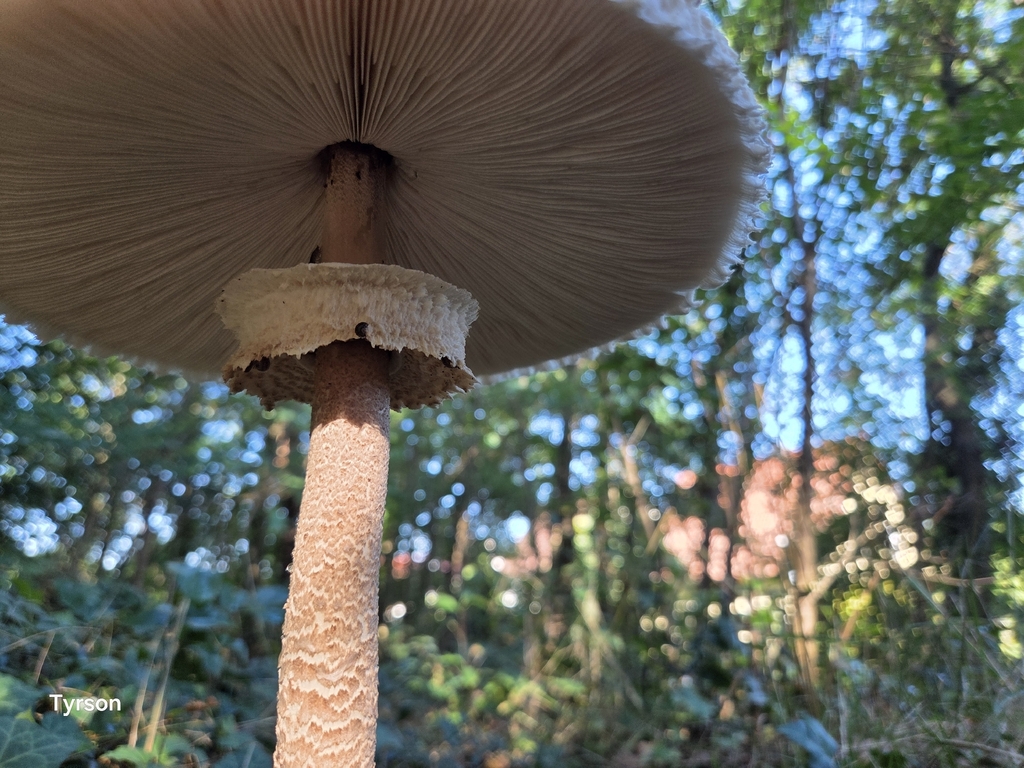
The ANBG describes the “standard mushroom” as having a stem, a cap and gills. Many mushrooms have extra features left behind by protective veils. Here’s a quick reference:
| Part | Technical term | What it is |
|---|---|---|
| Cap | Pileus | The top of the mushroom, which carries the spore-bearing surface underneath |
| Gills | Lamellae | Thin, plate-like structures under the cap where spores are made |
| Stem | Stipe | The stalk that lifts the cap |
| Ring | Annulus | A ring or collar on the stem, left by the partial veil |
| Volva | Volva | A cup-like sack at the base of the stem, left by the universal veil |
| Mycelium | Mycelium | The network of hyphae that makes up the main body of the fungus |
The cap holds up the spore-producing surface. Its colour, shape, texture and any scales or patches on top are important clues. Britannica’s student encyclopedia notes that common large mushrooms can have caps 8 to 10 inches (20 to 25 cm) across. Patches on top of the cap can be remnants of a veil, as explained below.
Britannica’s student encyclopedia describes gills as “radiating, platelike growths” on the underside of the cap. Each gill carries many spores. The colour of those spores, seen in a spore print, is a key identification feature. Our step-by-step guide to making a spore print shows how to do it.
The way the gills meet the stem is another clue. The Wisconsin Mycological Society suggests sorting gill attachment into four simple groups:
| Attachment | What it looks like |
|---|---|
| Free | The gills never reach the stem |
| Attached | The gills join the stem. Adnexed gills are barely attached, and adnate gills run straight into the stem |
| Decurrent | The gills run down the stem for a short distance |
| Notched | The gills look short, as if free, but are decurrent close to the stem |
The society notes that free gills are easiest to see in older mushrooms, where there’s a small gill-free zone around the stem, and that “one rarely needs a finer distinction” than these four groups.
Some mushroom-like fungi carry their spores on other surfaces. According to the ANBG, boletes are “mushroom-like, but with pores under the cap”, and polypores also have pores. Our guide to chicken of the woods and hen of the woods covers two popular pore fungi. Puffballs, meanwhile, make their spores inside a closed case.
The stem lifts the cap so spores can be carried away. The ANBG explains that mushroom spores are tiny, typically less than a hundredth of a millimetre long, and that a raised cap helps them travel farther on air currents. Stem features to note include its colour, texture, whether it’s hollow or solid, and what happens at the base.
Some mushrooms start life wrapped in protective tissue called veils. What these veils leave behind can be some of the most important identification features of all.
Britannica’s student encyclopedia explains that in some species, a membrane covers the young “button”. As the mushroom grows and breaks through, pieces of this membrane may remain:
Mycologist Michael Kuo, writing about the genus Amanita on MushroomExpert.com, says the universal veil often shows on the cap as warts or patches, and can form a volva at the base. Some volvas are sturdy and sack-like. Others are fragile and break apart, leaving only small traces.
A second, partial veil covers the young gills. Kuo explains that it often leaves a ring on the stem as the cap opens. Britannica’s student encyclopedia describes this as “a ring or collar below the cap.” Not every mushroom has a ring, and Kuo notes that some Amanita species have none.
| Veil | What it covers | What it can leave behind |
|---|---|---|
| Universal veil | The whole young mushroom | Patches or warts on the cap, and a volva at the stem base |
| Partial veil | The young gills | A ring (annulus) on the stem |
These features aren’t just technical details. They can be the difference between life and death.
Some of the most dangerous mushrooms belong to the genus Amanita, and features at the base of the stem, such as the volva, are central to identifying them. Kuo writes that “Amanita identification often begins with the base of the stem, which means that you will need to dig your specimens out of the ground with a pocket knife.” If you snap a mushroom off at ground level, you can leave the volva behind and lose a critical clue. Our article on the death cap mushroom explains why this group is so dangerous.
Veils matter in other ways too. A young Amanita still inside its universal veil can look like a small white egg or puffball, which is why puffball foragers are told to cut every specimen in half. Our guide to puffballs and their lookalikes explains how.
When you find a mushroom you want to learn about, note these features:
Recording these features is how you learn. It is not a way to decide a mushroom is safe to eat. Never eat a wild mushroom unless an experienced local expert has confirmed its identity.
A mushroom is the fruiting body of a much larger fungus, most of which lives hidden as a network of hyphae called mycelium. The mushroom’s job is to make and spread spores. Its main parts are the cap, the spore-bearing surface (gills, pores or other structures) and the stem, and some species also carry a ring and a volva left by protective veils. Learning these parts helps you describe mushrooms accurately and use field guides, and it shows why careful collecting, especially digging out the base, matters for safety.
Featured image: parasol mushrooms by Esa Aalto via iNaturalist (CC0 1.0).