Physical Address
304 North Cardinal St.
Dorchester Center, MA 02124
Physical Address
304 North Cardinal St.
Dorchester Center, MA 02124

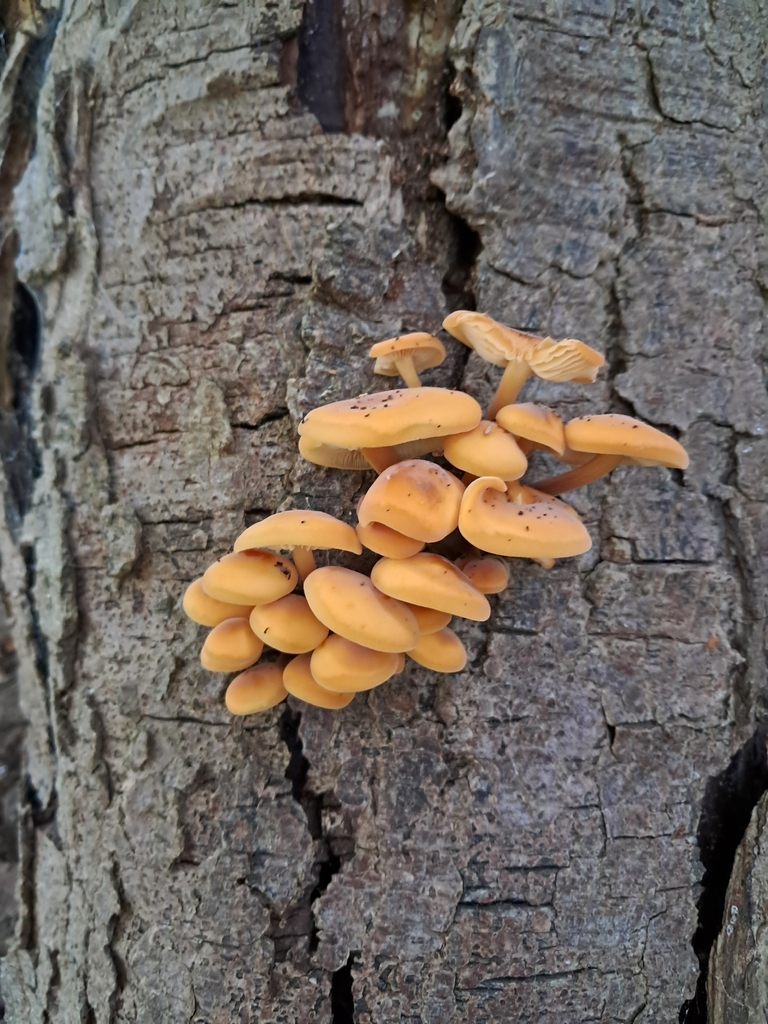
Enoki is a cold-loving mushroom whose shape you can steer with fresh air. Here is how to grow it on sawdust blocks, from kits or with a refrigerator method from Japanese research, plus the food-safety and foraging cautions every grower should know.
The enoki sold in supermarkets, with their bundles of long white stems and tiny caps, look nothing like the wild mushroom they come from. Wild Flammulina, known in Britain as velvet shank, has broad orange caps and short stems that turn dark and velvety with age. Much of the difference comes from how cultivated enoki are grown, especially the cool temperatures and the build-up of carbon dioxide (CO2) around the clusters.
That makes enoki a rewarding species to grow at home, because you can steer the result. Give the clusters plenty of fresh air and you get stubbier mushrooms with bigger caps. Restrict it and you move toward the long, thin bundles you see in the shops. This guide covers sawdust blocks, ready-made kits and a surprising method developed for teaching that uses an ordinary household refrigerator.
| Factor | What sources report |
|---|---|
| Substrate | Hardwood sawdust with bran. One study used 80% sawdust and 20% rice bran. A Japanese teaching method used spruce sawdust with rice bran |
| Spawn run | 18°C in darkness for 25 days (Lee et al. 2025). 25°C in a small-bottle teaching method (Togashi and Fukuchi 2022) |
| Fruiting temperature | 7 to 18°C (North Spore). 14 to 16°C (Lee et al. 2025). 5 to 10°C in a fridge (Togashi and Fukuchi 2022). 17 to 21°C for one golden enoki kit (Root Lab) |
| Humidity | 98 to 100% while pinning, then 88 to 95% (North Spore) |
| CO2 | 500 to 1,000 ppm while pinning, under 1,000 ppm as the mushrooms grow, for cap-forming yields (North Spore) |
| Light | About 300 lux for 8 hours a day in one study (Lee et al. 2025). 100 to 200 lux for one kit (Root Lab) |
The fruiting temperatures vary widely between sources. That reflects different strains: commercial white enoki strains, golden strains sold to home growers, and lab strains don’t all behave the same way. Follow your spawn supplier’s figure first and use the others as a guide. North Spore lists its golden enoki as Flammulina filiformis, the name now often used for the cultivated East Asian enoki, and also as F. velutipes. If you want more background on the mushroom itself, see our enoki guide.
A 2025 study in the Journal of Fungi by Lee and colleagues grew enoki on 80% sawdust and 20% rice bran. The bags were colonised in darkness at 18°C for 25 days and then fruited at 14 to 16°C and 80% humidity. During fruiting, the researchers compared two CO2 levels:
High CO2 also increased the number of fruit bodies. The authors traced the smaller caps to reduced activity of genes involved in cell division in the cap. Their results on stem length are mixed: one section found no significant difference, while others describe longer stems at high CO2. The practical point is clear, though. Stale air gives you many small caps. The authors also warn that CO2 building up in poorly ventilated bottles or bags causes uneven quality.
North Spore gives the home-grower’s version of the same lesson. High CO2 lowers yields and causes long, stringy stems with small caps, so it recommends keeping CO2 under about 1,000 ppm.
| You want | Fresh air | Result |
|---|---|---|
| Shop-style enoki | Restricted, for example by keeping a sleeve of bag around the cluster | Long, thin stems and tiny caps |
| Rustic, golden enoki | Plenty of fresh air once pins form | Shorter stems, larger caps and, according to North Spore, better yields |
Mix hardwood sawdust with bran. The Lee study used 80% sawdust and 20% rice bran, and wheat bran is a common alternative. Wet the mix so it holds together without dripping, then pack it into filter-patch bags or heat-proof jars. Supplemented sawdust needs full sterilisation in a pressure cooker or autoclave, not pasteurisation. Our article on sterilisation versus pasteurisation explains why.
Add grain spawn once the substrate has cooled. North Spore says a 6 lb bag of its golden enoki grain spawn will inoculate 120 to 165 lb of sterilised sawdust. Keep the bags in darkness while they colonise. The Lee study used 18°C for 25 days, and the Japanese teaching method used 25°C. A cool room is fine.
Enoki is a cold-weather mushroom. In the wild, Wild Food UK records velvet shank fruiting from December to April. Once the block is fully colonised, move it somewhere cooler and very humid. North Spore’s range is 7 to 18°C, with 98 to 100% humidity while pins form. Open the bag above the substrate, or cut an X in it as Root Lab suggests for its kits, and mist the opening daily. Our guide to cold shocking covers this kind of temperature drop in more detail.
For long, thin stems, leave most of the bag standing above the substrate as a sleeve once pins form, or roll a paper or plastic collar around the cluster. This keeps CO2 and humidity high around the stems. For more natural-looking clusters, cut the bag back and give the mushrooms gentle fresh air. Root Lab recommends reduced fresh-air exchange until pins form, then gentle airflow.
Cut or pull the whole bundle off at the base. Root Lab suggests harvesting as the caps begin to flatten, to avoid heavy spore drop. For shop-style enoki, harvest earlier, while the caps are still small and rounded.
A 2022 paper by Togashi and Fukuchi, from the National Institute of Technology, Asahikawa College in Japan, set out to create a simple enoki-growing manual for public science classes. Their key findings:
For a home grower, this is a neat trick. Once a jar is colonised, a spare shelf in a fridge (or a cold cellar or garage in winter) can provide the cold that enoki needs. Use a dedicated fridge, or keep the jars sealed apart from food. A colonised jar is still a living fungal culture, and you don’t want spores or moulds near your groceries.
If you’d rather skip sterilisation, golden enoki kits are widely available. Root Lab’s kit instructions give a fruiting range of 17 to 21°C and warn that warmer conditions can shorten the stems or make the pins abort. They also recommend humidity of 90 to 95% or more and light of about 100 to 200 lux. That is warmer than most other sources suggest, which shows again how much strains differ. Always follow the instructions that come with your kit.
Outdoors, North Spore says golden enoki may fruit in spring or autumn in cooler regions, in beds or containers made from straw or wood chips mixed with grain spawn. It notes that indoor growing is this species’ strength. Grain spawn should not be used to inoculate logs.
Enoki has been linked to Listeria outbreaks. The US Centers for Disease Control and Prevention (CDC) says a 2020 outbreak was the first known one linked to enoki. It also investigated a 2022 outbreak in which five people in four states were hospitalised. CDC’s advice is to cook enoki thoroughly. It also says that pregnant women, adults aged 65 and older, and people with weakened immune systems should not eat raw enoki at all. North Spore likewise advises cooking its enoki thoroughly, and suggests eating only a small amount the first time you try it, in case of an allergic reaction.
Home-grown enoki deserves the same care. Keep your growing area clean, refrigerate the harvest, and cook it before eating.
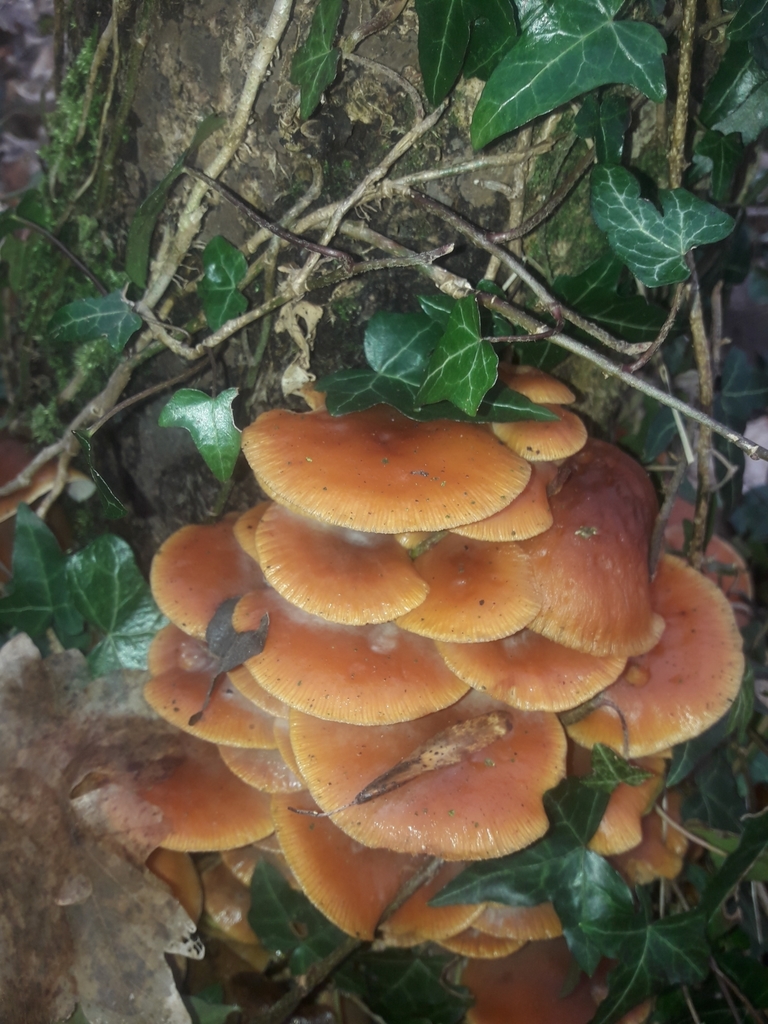
Wild Food UK treats velvet shank as an edible species that should be cooked, but it has a dangerous look-alike. The site warns that the funeral bell (Galerina marginata) is “similar and deadly poisonous”, and can be told apart partly by the ring (skirt) on its stem. It also points to spore print colour: velvet shank’s is off-white, while some look-alikes, such as the common rustgill, have rust-coloured spores. These details matter, but a description or photo is never enough on its own. If you want to try wild Flammulina, learn it in person from an experienced local forager first. If something unexpected appears among your enoki blocks or beds, don’t eat it.
For a side-by-side look at the temperatures different species prefer, see our temperature cheat sheet.
Featured image: wild Flammulina by A Hill via iNaturalist (CC0 1.0). Inline photo by John Haddon via iNaturalist (CC0 1.0).