Physical Address
304 North Cardinal St.
Dorchester Center, MA 02124
Physical Address
304 North Cardinal St.
Dorchester Center, MA 02124

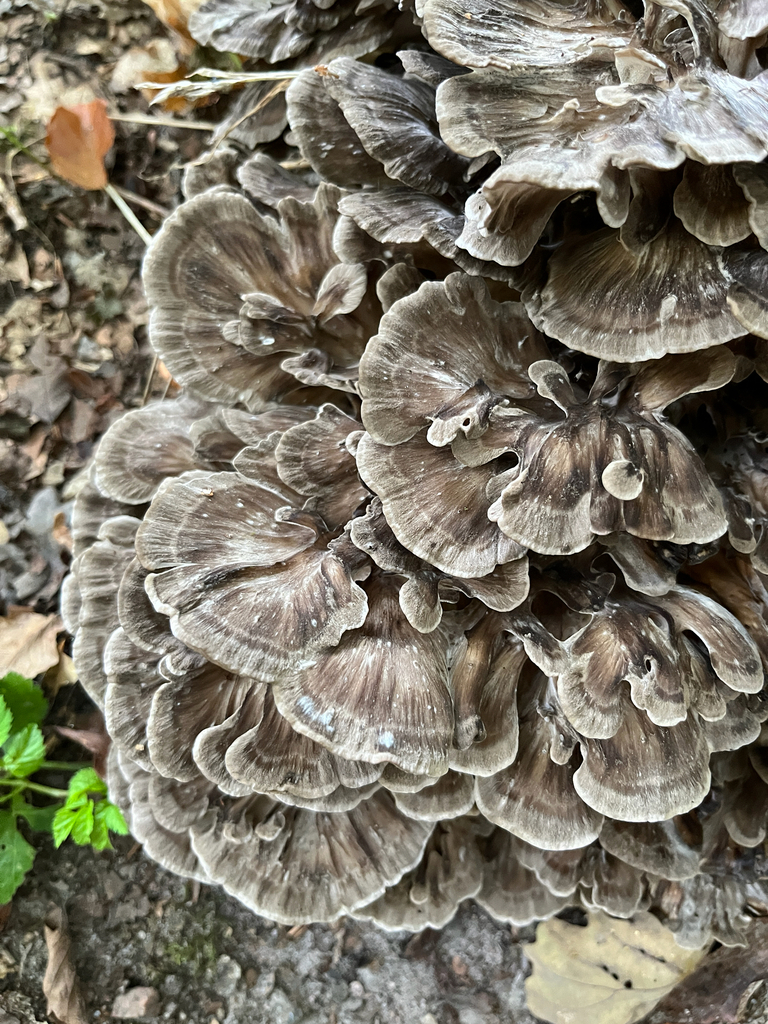
Maitake is slow and fussy, but it can be grown at home. Here are the two proven methods, indoor sawdust bags and buried oak logs, with the temperatures, timings and fresh-air needs published by researchers and spawn suppliers.
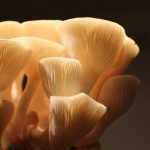
Maitake, also called hen of the woods (Grifola frondosa), is one of the most rewarding mushrooms you can grow, and one of the most demanding. Unlike oyster mushrooms, which will fruit from almost any pasteurised straw, maitake is slow, fussy about temperature and fresh air, and varies a lot from strain to strain. A 2021 master’s thesis on maitake cultivation from the Swedish University of Agricultural Sciences describes it plainly as a difficult species with a narrow window of good conditions.
The good news is that there are two well-documented ways to grow it at home. The first is the indoor sawdust-bag method used by commercial farms. The second is the buried-log method, which is slow but needs little equipment once the logs are inoculated and can keep producing for years. This guide covers both, with the temperatures and timings published by researchers and specialist suppliers, so you can choose the route that suits your space and patience.
In the wild, maitake grows at the base of hardwood trees, especially oaks. UMass Extension describes Grifola frondosa as a cause of root and butt rot in oaks, fruiting from late summer into autumn. In southern New England, its fruiting peaks between mid-September and early October. Michael Kuo’s MushroomExpert profile describes it as weakly parasitic and also saprobic, meaning it can keep living on wood after the tree has died. Its large, branched clusters typically measure 15 to 40 cm across.
That biology explains the growing methods. Maitake is a white-rot fungus that digests hardwood, so cultivated maitake is grown on hardwood sawdust or on short sections of hardwood log, most often oak. It also explains why it is slow: it builds up a lot of mycelium before it commits to fruiting.
If you want background on the mushroom itself, including its flavour and kitchen uses, read our maitake guide first. This article sticks to cultivation.
| Indoor sawdust bags | Buried logs outdoors | |
|---|---|---|
| Equipment | Pressure cooker or steam sterilisation, filter-patch bags, a humid fruiting space | Pressure cooker or large pot, autoclavable bags, a shady garden spot |
| Time to first harvest | Roughly 2 to 3 months under controlled conditions | Usually 3 months to 2 years after burial |
| Control | High: you set temperature, humidity, light and fresh air | Low: the weather decides |
| How long it produces | Usually one main flush per bag | Logs can fruit for 7 years or more |
| Best for | Growers who already run sterile sawdust blocks | Patient growers with a shady yard and an oak supply |
For a general comparison of these two styles across all species, see our article on log growing versus bag growing.
This is the method used for commercial production and studied in most published research. It needs sterile technique, because the rich sawdust and bran mix that maitake likes is also an ideal food for moulds.
A useful reference recipe comes from a 2018 study by Song and colleagues in AMB Express, which used as its control formula:
The bran supplies extra nitrogen, and the calcium carbonate helps buffer acidity. In the same study, formulas that replaced part of the sawdust with corn cob gave higher yields. The best one reached a biological efficiency of 44.91%, compared with 32.42% for the control. Biological efficiency is the fresh weight of mushrooms harvested divided by the dry weight of substrate. Corn cob is not always easy to buy, so the plain sawdust and bran mix is a sensible starting point.
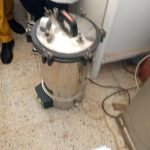
Pack the moist mix into polypropylene grow bags with a filter patch. The researchers autoclaved their bags at 121°C for 85 minutes. At home, a pressure cooker at 15 psi reaches about the same temperature. Large or densely packed bags need extra time, because heat takes a while to reach the centre. Supplemented sawdust must be sterilised, not just pasteurised. Our explainer on sterilisation versus pasteurisation explains why.
Once the bags have cooled completely to room temperature, add maitake spawn. The researchers used 10 ml of liquid spawn per bag. Home growers more often use grain spawn from a supplier. Work in front of a flow hood or in a still-air box. Seal the bags straight away. If you have never done sterile inoculation, practise first with a forgiving species such as oyster.
Keep the bags in darkness at about 23 to 26°C (73 to 79°F). Song’s team held carbon dioxide (CO2) below 3,000 ppm during this stage. The literature review in Dahlin’s 2021 thesis found an average spawn-run temperature of about 23°C. In one study it summarises, the spawn run took about 62 days.
The study kept bags in these conditions until primordia formed. Primordia are the small first growths of the mushroom, and they are the signal that the bag is ready to move on. Be patient here, because maitake usually takes much longer than oyster to reach this point.
This stage is where most home attempts go wrong, because maitake reacts strongly to stale air. The conditions used in the 2018 AMB Express trial were:
| Factor | Spawn run | Fruiting |
|---|---|---|
| Temperature | 23 to 26°C | 19 to 21°C |
| Relative humidity | Not specified | 93 to 97% |
| Carbon dioxide | Below 3,000 ppm | 400 to 700 ppm |
| Light | Darkness | About 200 lux, 12 hours a day |
Across the literature it reviewed, Dahlin’s thesis found a slightly cooler average fruiting temperature of around 17°C and humidity near 87%. It also cites recommendations to keep CO2 at 500 to 800 ppm, because levels of 1,000 ppm or more tend to produce misshapen fruit bodies. In practice, outdoor air is roughly 400 to 450 ppm. So a fruiting space needs frequent fresh-air exchange, not just a sealed humid box.
To start fruiting, open or cut back the top of the bag above the primordia. Lower the temperature into the fruiting range, raise the humidity, and give the bag gentle, indirect light. A small fan feeding a humidified tent, or a shotgun-style fruiting chamber with plenty of holes, can work. A sealed tub with occasional fanning usually is not enough.
Harvest when the rosette has formed distinct, overlapping caps but before the edges thin out and curl. Twist or cut the whole cluster off at its base. In the Song study, the full cycle for the control formula, from inoculation to harvest, was about 63 days. Expect your own timing to be longer if your conditions are less tightly controlled.
This is the method mushroom pioneer Paul Stamets recommends, according to Dahlin’s review. It is close to how maitake lives in nature. Field & Forest Products, a long-established US spawn supplier, publishes the steps below.
Buried maitake logs can keep producing for 7 years or more, according to Field & Forest, so a single afternoon of work can supply clusters for several autumns.
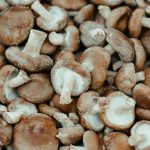
Burying the log keeps it moist and cool and gives a steady temperature. It also mimics the root zone of an oak, where wild maitake usually appears. The surrounding soil also provides the temperature drop of early autumn, which tends to trigger fruiting in nature. For a similar outdoor project with a different species, see our guide to growing shiitake on logs.
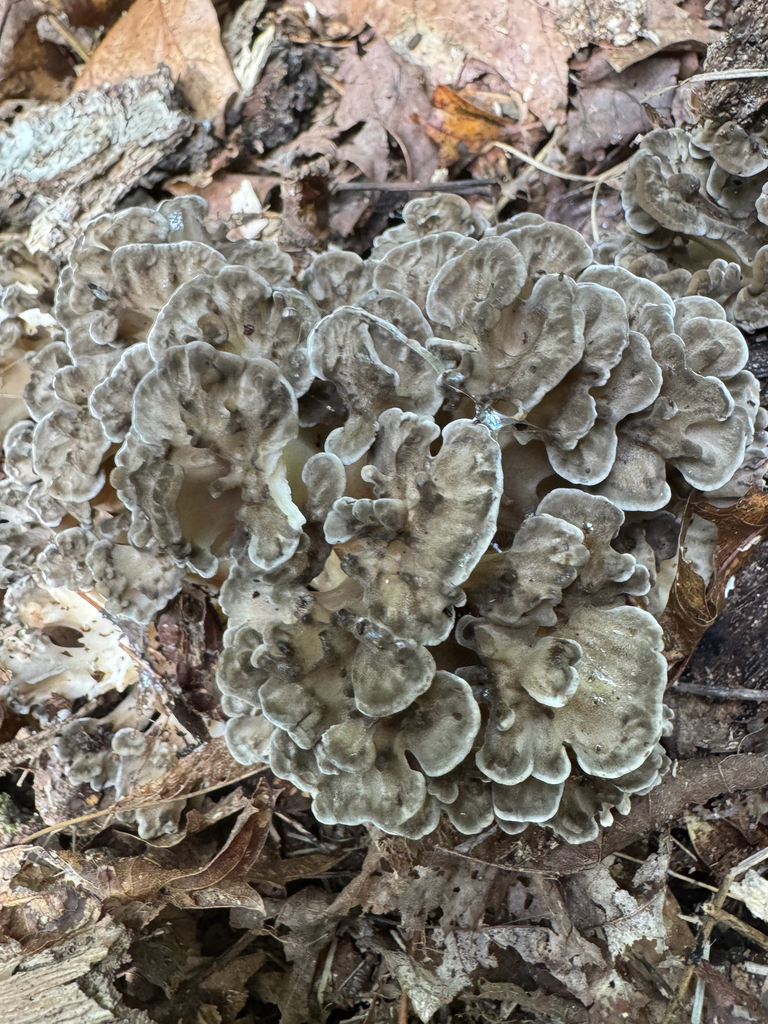
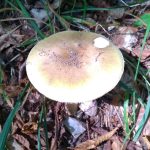
A garden bed with buried maitake logs will sit among other wild fungi. Some of them grow in similar clustered shapes. Kuo lists Meripilus sumstinei (the black-staining polypore) and Polyporus umbellatus as look-alikes. UMass Extension also mentions Meripilus. A cluster that comes up near your logs is not automatically one of yours.
Before eating anything that appears outdoors, confirm what it is, with an experienced local identifier if you have any doubt. A photo or a written description is not enough to decide that a wild mushroom is safe to eat. Indoor bags grown from a known spawn are far less likely to cause confusion, but you should still throw out anything that looks or smells wrong.
Cloning a fresh cluster onto agar is possible for experienced growers. However, fruiting tissue from a supermarket pack is often old or contaminated, and you won’t know whether the strain fruits well. Buying a commercial culture or spawn is more reliable.
Maitake is a hardwood decomposer. Published cultivation work uses hardwood sawdust, often with bran or other supplements, or hardwood logs. Straw is not a standard substrate for this species.
Oak is the classic host and the wood most often recommended for logs. The AMB Express study used a general hardwood sawdust, and Dahlin’s thesis also lists beech among maitake’s natural hosts. Avoid softwoods such as pine.
Yields vary widely with strain, substrate and conditions, so treat any single number with caution. The 2018 study reported biological efficiency of about 32% for its basic sawdust formula. That means roughly 320 g of fresh mushrooms per kilogram of dry substrate under research conditions. Results at home are usually lower.
Featured image: maitake cluster by Jan Wegmann via iNaturalist (CC0 1.0). Inline photo by Geoff Swaebe via iNaturalist (CC0 1.0).