Physical Address
304 North Cardinal St.
Dorchester Center, MA 02124
Physical Address
304 North Cardinal St.
Dorchester Center, MA 02124

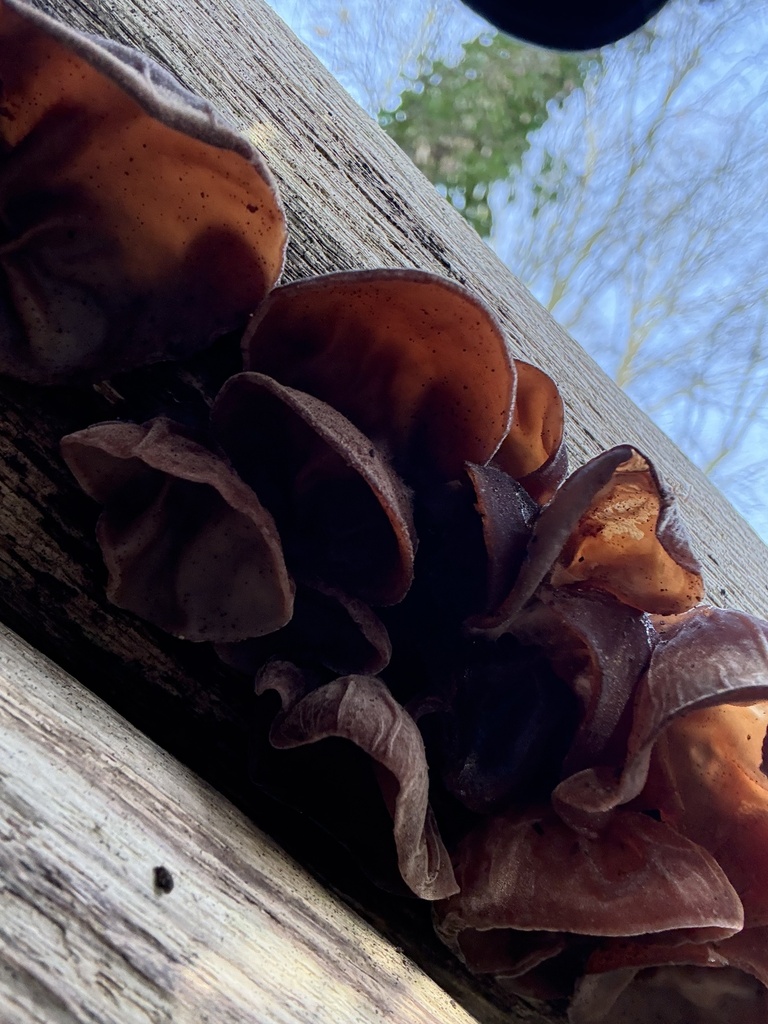
Wood ear (black fungus) can be grown on oak logs outdoors or on sterilised sawdust bags indoors. This guide covers both methods, published conditions and yields, drying, and the soaking rule every cook should follow to avoid bongkrekic acid.
Wood ear, also called black fungus, cloud ear or jelly ear (Auricularia species), is one of the most widely farmed mushrooms in the world. Few home growers try it, though. It has no cap, no gills and no stem: just rubbery, ear-shaped brown or black jelly that grows from wood and dries to a fraction of its size. That unusual biology means it is grown a little differently from oyster or shiitake, and it rewards patience.
This guide explains the main routes for growing wood ear at home: outdoor logs, and indoor sawdust bags. It also covers drying and rehydrating your harvest, and a little-known food-safety rule about soaking dried wood ear that every grower and cook should follow.
Several Auricularia species are cultivated. A 2023 paper in Studies in Fungi by Walker and colleagues lists A. heimuer and A. polytricha as commercially grown in China. It adds that A. cornea and A. heimuer are grown for sale across China and South-East Asia, and that Thailand’s commercial growers have used A. auricula-judae and A. polytricha. The same paper cites figures showing that China produces more than 90% of the world’s wood ear, with 674,000 tonnes of dried product in 2018. It also notes that wood ear has been cultivated in China for around 2,100 years.
For home growers, the important point is that spawn may be sold under any of these names. Species differ in their preferred temperatures, so match your growing conditions to the species and strain you buy. For more on the mushroom itself in the kitchen, see our wood ear guide.
| Outdoor logs | Indoor sawdust bags | |
|---|---|---|
| Difficulty | Easy to set up, slow to start | Harder: needs sterilisation and steady humidity |
| Substrate | Freshly cut hardwood logs, with oak recommended | Hardwood sawdust with bran |
| Time to first harvest | Often 8 to 12 months or more to colonise | Roughly 3 to 5 months after inoculation in the sources below |
| Fruiting trigger | Rain and mild, cool weather | High humidity, light and a cooler room |
| Best for | Gardens with shade and regular rain | Growers already used to sterile sawdust blocks |
Mushroom Mountain, a US spawn supplier, recommends oak for wood ear logs, though other healthy hardwoods may also work. The process will be familiar if you’ve grown shiitake on logs:
Not sure whether logs or bags suit you better? Our comparison of log growing and bag growing sets out the trade-offs in cost, effort and yield.
Mushroom Mountain says outdoor logs commonly take about 8 to 12 months or longer to colonise. During that time, keep the wood consistently moist and protect it from drying out for long periods. Once established, wood ear fruits best at around 50 to 70°F (10 to 21°C), in cool to mild weather. It often fruits after periods of rain. Well-kept logs may keep producing for several seasons.
Moisture is the main lever. Because fruiting so often follows rain, outdoor logs do best somewhere naturally damp, and watering or soaking them during dry spells helps keep them productive.
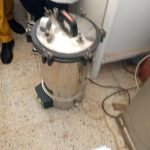
Most commercial wood ear is grown on sawdust. Walker and colleagues note that sawdust is typically the main substrate, with agricultural waste used in parts of South-East Asia to keep costs down. Indoor growing is more demanding than logs, because supplemented sawdust must be sterilised and the bags need high humidity for weeks.
| Source | Substrate | Colonisation | Fruiting conditions |
|---|---|---|---|
| Walker et al. 2023 (A. cornea, Thailand) | Rubber-tree sawdust with rice bran and other supplements, 800 g bags | 60 days at 25°C in darkness | 25°C, 75 to 85% humidity |
| Thongklang and colleagues (wild A. cornea strain, Thailand) | Rubber-tree sawdust bags | Not stated | 25°C, 75 to 85% humidity |
| Root Lab (A. auricula-judae culture) | 80% sawdust and 20% bran, sterilised | About 25 to 30 days at 23°C | 10 to 21°C, very high humidity, more than 1,000 lux of light |
The differences reflect the species. A. cornea strains from tropical Thailand fruit at warm temperatures. Temperate A. auricula-judae prefers cooler conditions. Root Lab even advises staying at the lower end of its range, and suggests a cold shock if the bags won’t fruit. Its product page has some inconsistent figures, so treat them as a rough guide and follow the instructions supplied with your culture.
Published yields vary widely. Walker and colleagues recorded 19.4 to 31.0 g per bag from the first flush, depending on the strain. Thongklang and colleagues reported an average of 242 g over six flushes in three months, a biological efficiency of about 72%. Biological efficiency is the fresh weight of mushrooms divided by the dry weight of the substrate. A study cited by Walker reported 288.9% for A. polytricha on sawdust supplemented with oil palm fronds and spent grain. As with most species, strain and substrate make a large difference.
As a general rule, harvest wood ear when the “ears” have fully expanded but are still soft and flexible. Twist or cut them off at the base. Because the fruit bodies are mostly water, they shrink dramatically when dried. Spread them in a single layer somewhere warm and airy, or use a food dehydrator, until they are hard and brittle. Store them in an airtight container.
This is the most important section for anyone who eats wood ear. Hong Kong’s Centre for Food Safety (CFS) has warned about bongkrekic acid, a heat-resistant toxin produced by the bacterium Burkholderia gladioli pathovar cocovenenans. According to the CFS:
So: rehydrate dried wood ear for a short time in clean water, refrigerate it if it must soak overnight, and never leave it soaking at room temperature for days. Because the toxin resists heat, cooking will not make over-soaked wood ear safe. If you’re not sure how long something has been soaking, throw it out.
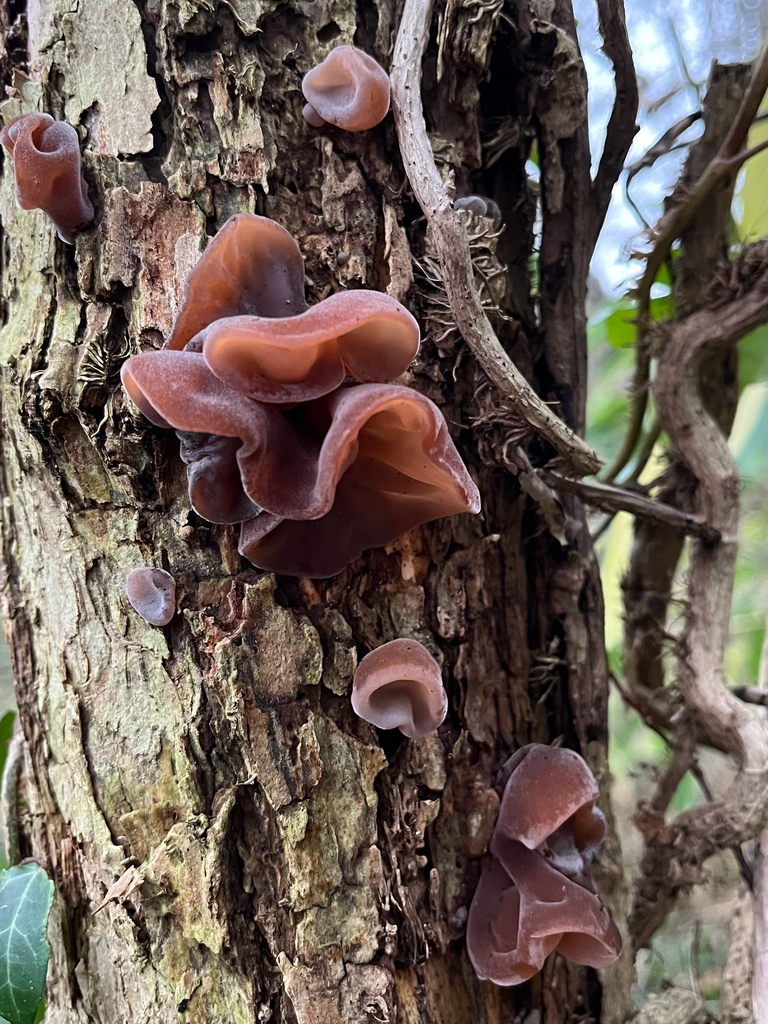
Wood ear grows wild in many regions, often on dead branches. The photos in this article show wild A. auricula-judae in the UK. Several other jelly fungi also grow on wood, and wild fungi always carry identification risks. If you want to forage, learn the species in person from an experienced local identifier first, and never rely on a photo or description alone. Growing from purchased spawn avoids the problem.
For a different log-grown species with cool-weather fruiting, see our guide to growing nameko.
Featured image: wood ear by Charles Joynson via iNaturalist (CC0 1.0). Inline photo by geoffWCNR via iNaturalist (CC0 1.0).